
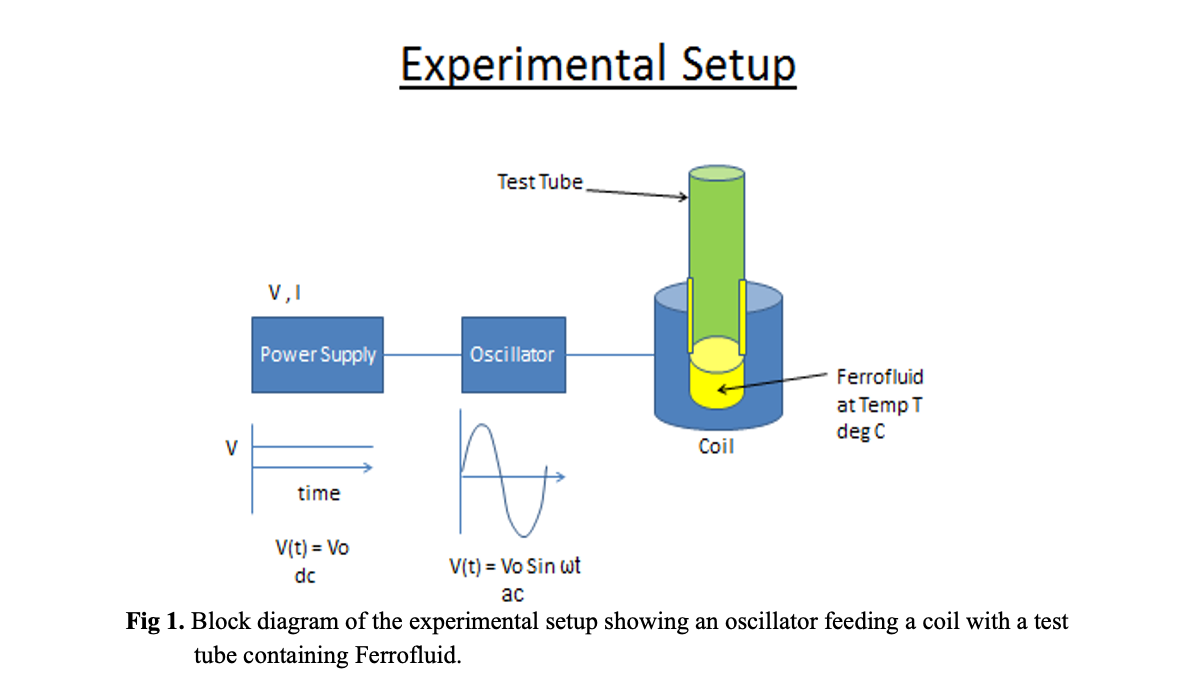
Magnetic hyperthermia has become a rapidly growing field. The technique involves the injection of magnetic nanoparticles, like Ferrofluid, into tumor cells and the subsequent application of an external alternating magnetic field. The resulting temperature rise in the Ferrofluid is utilized to destroy the tumor cells. One of the obvious parameters researchers are interested in, is the temperature achieved in-situ and the time needed for this temperature to be reached. Knowing these parameters would facilitate the optimization of the treatment by preserving normal cells while also providing important temperature feedback. It is vastly preferable to determine the temperature non-invasively for several reasons. Measuring the temperature of the Ferrofluid inside the body is a complex problem since there are many dynamic variables involved, such as capillary flow, the thermal properties of tissues, and location among others. Thus, we present a new, non-invasive method to determine and control the temperature of Ferrofluid in a tumor located within the body. The experimental results indicate that this is a viable method. Additionally, the exact mechanism of heating, on which there has previously been much speculation, has been elucidated through our study. It has been found that most of the heating effect in Magnetic Ferrofluid is related to the viscosity of the oil used in the synthesis of the Ferrofluid. These results hold important practical significance and could cumulatively be utilized to further improve magnetic hyperthermia treatment.
December 28, 2025