
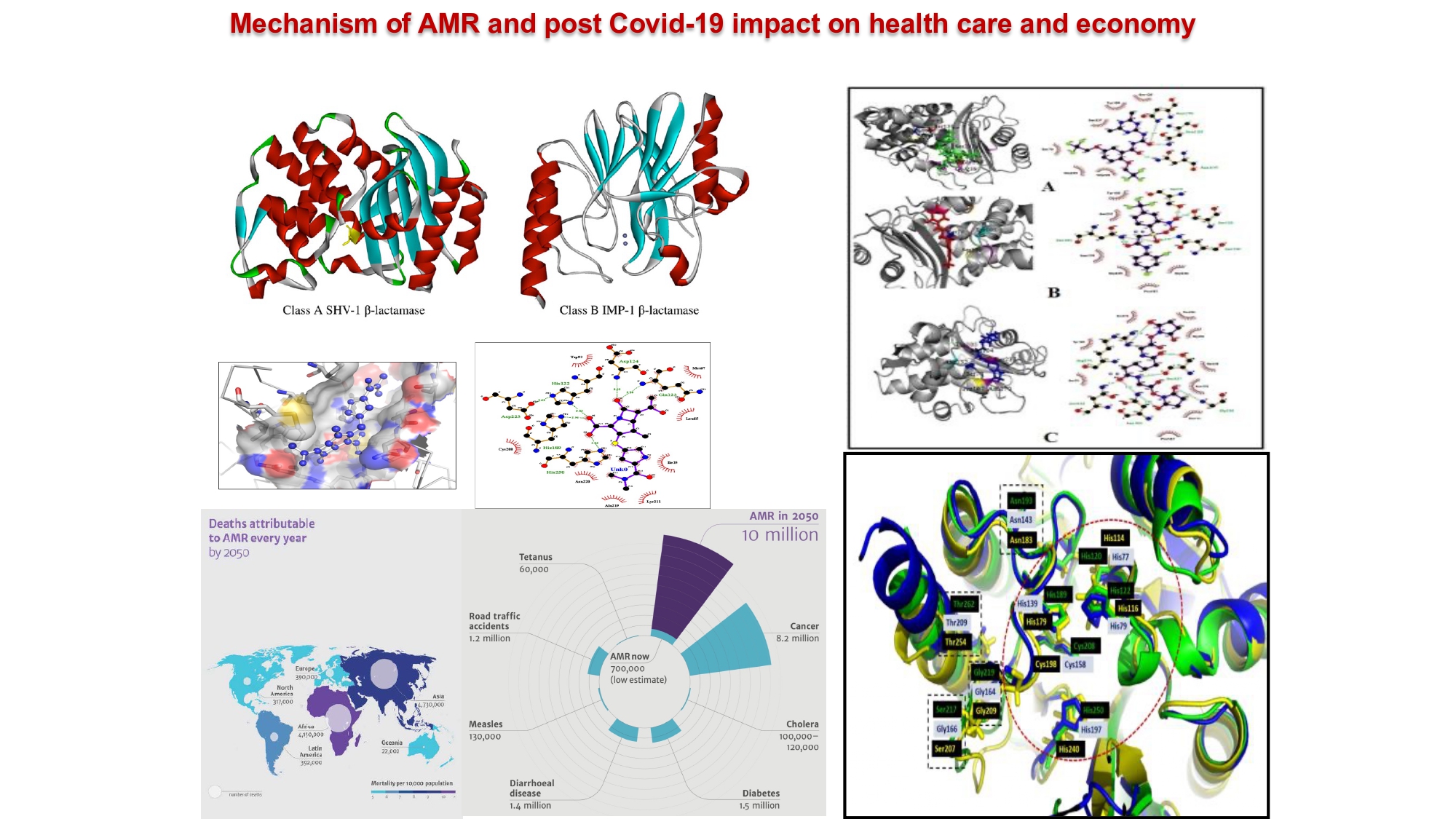
Antimicrobial resistance (AMR) has become a global concern for physicians and healthcare workers. The last resort of antibiotic, colistin has been found ineffective. What next?, is a big question. As per WHO, by 2050 almost 10 million people will die because of AMR. But the statistic was analysed before COVID-19. I presume the severity of resistance has to enhance further after COVID-19 since, the use of antibiotic has been increased several time over pre-COVID-19 phase. Among the resistance markers being spread, carbapenemases including NDM, OXA and IMP are most commonly found globally. If you further analyse, NDM-1, NDM-4, NDM-6,NDM-7 are more frequently circulating in Indian sub-continents. Therefore, my lab is focusing on detection of NDM variants in hospital settings as well as environmental settings. We have identified NDM-4 as first report from India in 2014 and the same was identifies subsequently in several other studies. These markers were also cloned and expressed in the lab to understand the structure function relationship. We have generated several mutants of NDM-1 to understand amino acid residues involved in action of NDM-1 enzyme against antibiotics. Overall, NDM and its variants are more prevalent in hospital as well as environmental settings leading to high resistance rate. Therefore, this is the time to think sensibly and try to control spread of resistance markers.
December 28, 2025