
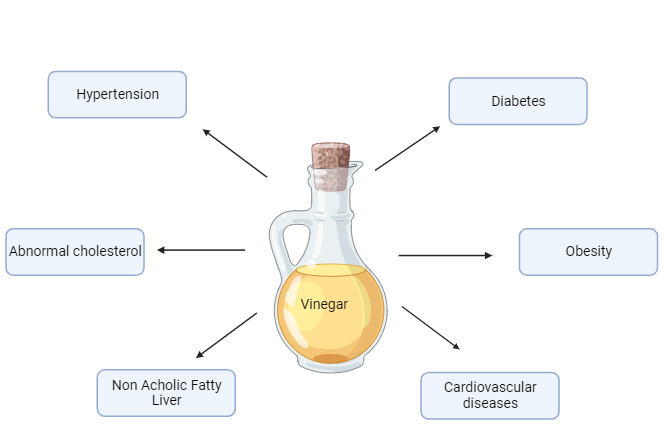
Vinegar is one of the established but scientifically non evaluated functional food followed for treatment of metabolic disorder. Despite of vast production and usage, vinegars have not much been scientifically validated. However they are rich source of bioactive phytocompounds including phenolic compounds, amino acids, carotenoids, phytosterols, vitamins, minerals, alkaloids, acetic acid, and other organic acids, that can be linked to its health benefits. These bioactive compounds are known to induce responses comprising anti-inflammatory, anticancer, antidiabetic, antioxidant, and antibacterial actions. Apple cider, balsamic, sherry are some of the few widely used and investigated vinegars. Studies have shown that vinegar can decrease lipogenesis, increase lipolysis, and accelerate fatty acid oxidation. They are known to lower plasma LDL-cholesterol level and elevate HDL-cholesterol, increase glucokinase activity, decrease glucose-6-phosphatase activity, elevate hepatic glutathione, trolox equivalent antioxidant capacity levels, as well as catalase and glutathione peroxidase which suggests that vinegar may be utilized as a treatment for obesity and other related diseases including hypertension, cardiovascular diseases. The type of raw material and production technique utilized determine the variety and concentrations of bioactive components in vinegars. Depending on the source material and production technique, vinegars can have a wide range and concentration of bioactive phytocompounds. Intriguingly, vinegar supplementation is one of the budget friendly and effective approach in managing lifestyle related metabolic disorders.
December 28, 2025