
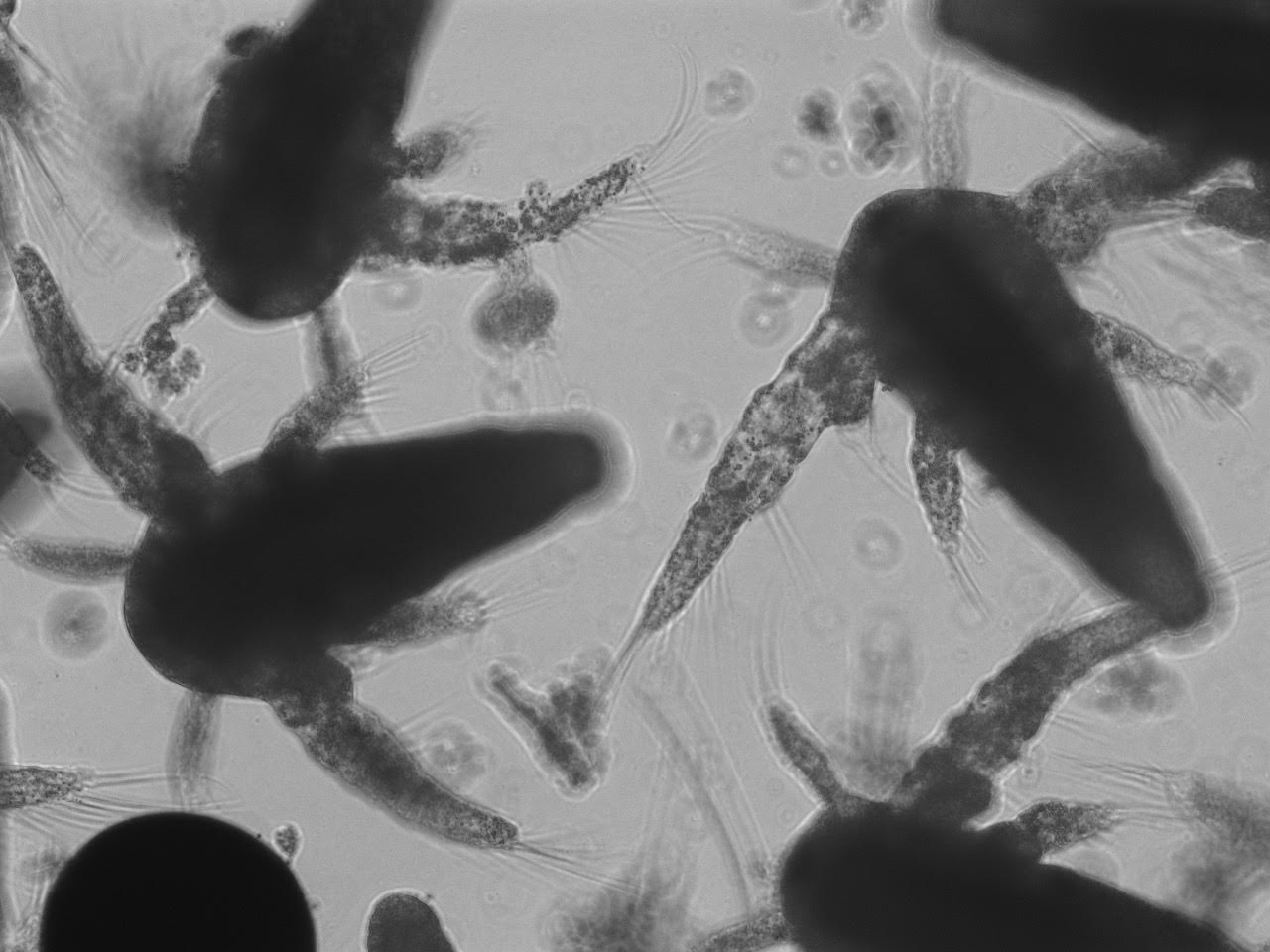
This project explores the implementation of different cryopreservatives and their effects on invertebrate species such as the Brine Shrimp (Artemia spp.). Cryopreservation success depends mainly on using cryoprotectants, which prevent ice crystals from forming under fragile tissues. Most commonly found as glucose or urea in species such as the wood frog (Rana Sylvatica), cryoprotectants prevent the cellular structures from collapsing. Studies in this project will investigate the roles of different sugars such as trehalose, glucose, glycerol, saccharin, and sucrose, in cryopreservation. These sugars are known to create highly concentrated solutions which lowers the freezing point of water, thus protecting cellular structures and potentially increasing the survival rates during processes of extreme freezing and thawing. Nauplii (Larvae of Brine Shrimp) were hatched and treated with different sugars in their solutions. Frozen with trehalose, glucose, glycerol, saccharin, and sucrose, Nauplii were kept at -20ºC for 24 hours. Viability was measured by counting the survival of individuals after 1 hour of thawing. The results that followed, presented a 0% success rate of survival in any solution of sugar. Therefore, suggesting that the passive absorption of sugars from the solutions was not sufficient for protection from extreme measures such as freezing. To further explore the effects of these same sugars, however, in less extreme conditions, a second experiment was conducted. For 36 hours, Nauplii were stored at 4ºC. The results of this experiment represented the success of trehalose, with a survival rate being 95%, compared to glucose which had a a survival rate of 72%. Although not extreme, the experimentation of a stress-induced environment (low temperatures) results in observable data on the effects the sugars have on the viability of Brine Shrimp. These findings present that trehalose is the most effective cryopreservation sugar for Brine Shrimp under temperature stress, demonstrating the potential future uses of this sugar under increased environmental stress. Trehalose and further investigations regarding the mechanisms of cryopreservation, as well as observation of organisms that withstand extreme environmental stress will increase the ability to conduct better experiments through deeper understanding. And, understanding the stabilization of cellular structures from this sugar will enhance the future knowledge of cryopreservation and its limits. Such insights could lead to future improvements in cryopreservation and its techniques possibly leading to the ability of application to broader subjects.
December 28, 2025