
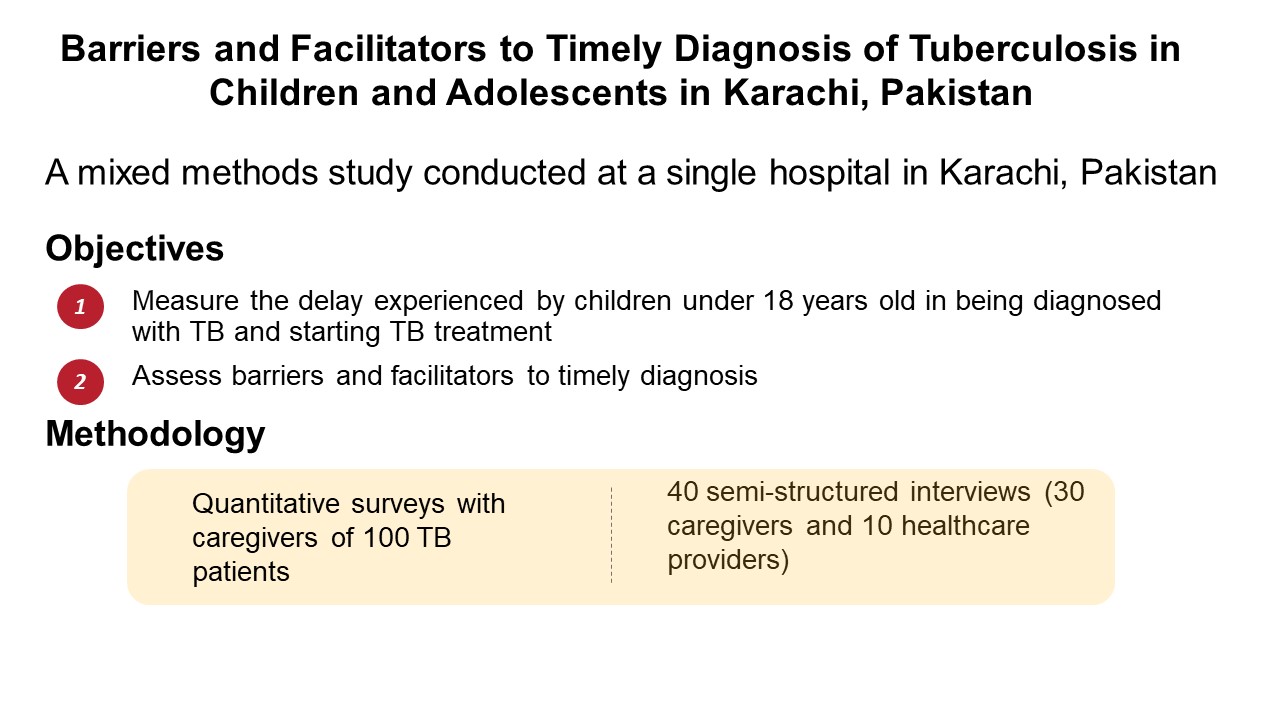
Background: Pakistan has a high TB burden, but the diagnosis, particularly in children and adolescents, is often delayed. We conducted a study to understand the barriers and facilitators to the diagnosis of TB in children and adolescents in a not-for-profit hospital in Karachi, Pakistan.
Design/Methods: We conducted a convergent mixed methods study (August – December 2023). The study comprised of quantitative surveys with caregivers of 100 TB patients < 18 years old and 40 semi-structured interviews (30 caregivers and 10 healthcare providers). Caregivers were surveyed and interviewed about their journey from symptom(s) onset to TB treatment initiation. Healthcare providers were interviewed on the processes and systems in
place at the hospital.
Results: Among the TB patients whose caregivers were surveyed, 77% were female and 82% were 10-17 years old. Caregivers reported a median total delay of 91 days (IQR 58-160) between symptom(s) onset and treatment initiation. Median delay between symptom(s) onset and the first visit to any health facility was 73 days (IQR 42-130). Median delay between the first visit to a healthcare facility and the TB diagnosis was 65 days (IQR 30-114). The two major barriers were found to be financial constraints of caregivers and the involvement of general physicians. Almost all caregivers who were interviewed mentioned financial constraints as the main reason behind the delay in their child’s diagnosis. In addition, 69% of caregivers who were surveyed chose general physicians for their first healthcare visit, but felt that the general physicians did not provide satisfactory healthcare to the patients.
Conclusions: Interventions that increase the accessibility of TB care services by overcoming cost barriers of families, as well as strategies that enhance the capacity of primary-level general physicians, are necessary to reduce delays in TB diagnosis and treatment initiation for children and adolescents.
December 28, 2025