
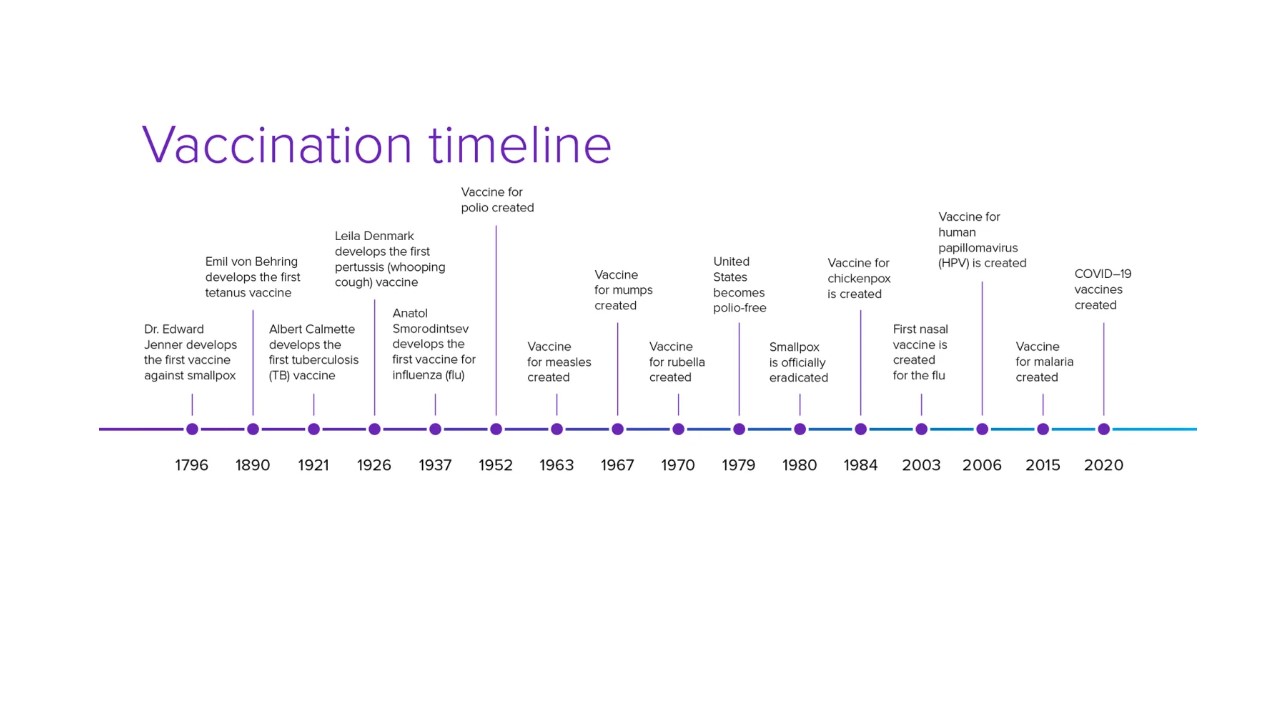
Vaccines are one of the most significant medical breakthroughs, saving millions of lives by preventing infectious diseases. Their origins date back to 1796 when Edward Jenner developed the first vaccine against smallpox. Jenner’s pioneering method involved using material from cowpox lesions to stimulate immunity, marking the birth of immunology. The advent of germ theory in the 19th century, championed by Louis Pasteur and Robert Koch, provided a scientific basis for understanding diseases and designing targeted vaccines. This revolutionary idea eventually led to the eradication of smallpox and inspired the development of vaccines for many other diseases.
The 20th century ushered in a golden age for vaccine development. Key milestones included vaccines for diphtheria, tetanus, pertussis (whooping cough), and polio. Jonas Salk’s development of the inactivated polio vaccine in the 1950s was particularly impactful, demonstrating the power of vaccination to control and nearly eliminate an epidemic. These successes were followed by vaccines for measles, mumps, rubella, and other infectious diseases, leading to dramatic reductions in childhood mortality worldwide.
Modern vaccine development has advanced significantly with the integration of biotechnology and molecular biology. The most striking example is the use of messenger RNA (mRNA) technology, which enabled the rapid creation of vaccines against COVID-19. Unlike traditional vaccines, mRNA vaccines teach human cells to produce a harmless piece of the virus, prompting an immune response. These vaccines proved highly effective and showcased the potential for rapid responses to future pandemics.
Despite remarkable progress, challenges remain. Diseases like HIV, malaria, and tuberculosis have proven difficult to combat with vaccines due to the complex nature of their pathogens. Researchers are now exploring new approaches, such as nanoparticle-based vaccines, vector-based vaccines, and personalized immunotherapies, to address these challenges.
In addition to scientific challenges, vaccine hesitancy poses a significant barrier to public health. Fueled by misinformation, mistrust, and cultural factors, hesitancy threatens to undermine decades of progress. Global initiatives aim to close this gap, as universal vaccination is essential to achieving global health security.
In conclusion, vaccines have transformed public health, since from Jenner’s smallpox vaccine to today’s cutting-edge mRNA vaccines, their development showcases the power of science, innovation, and collaboration.
December 28, 2025