
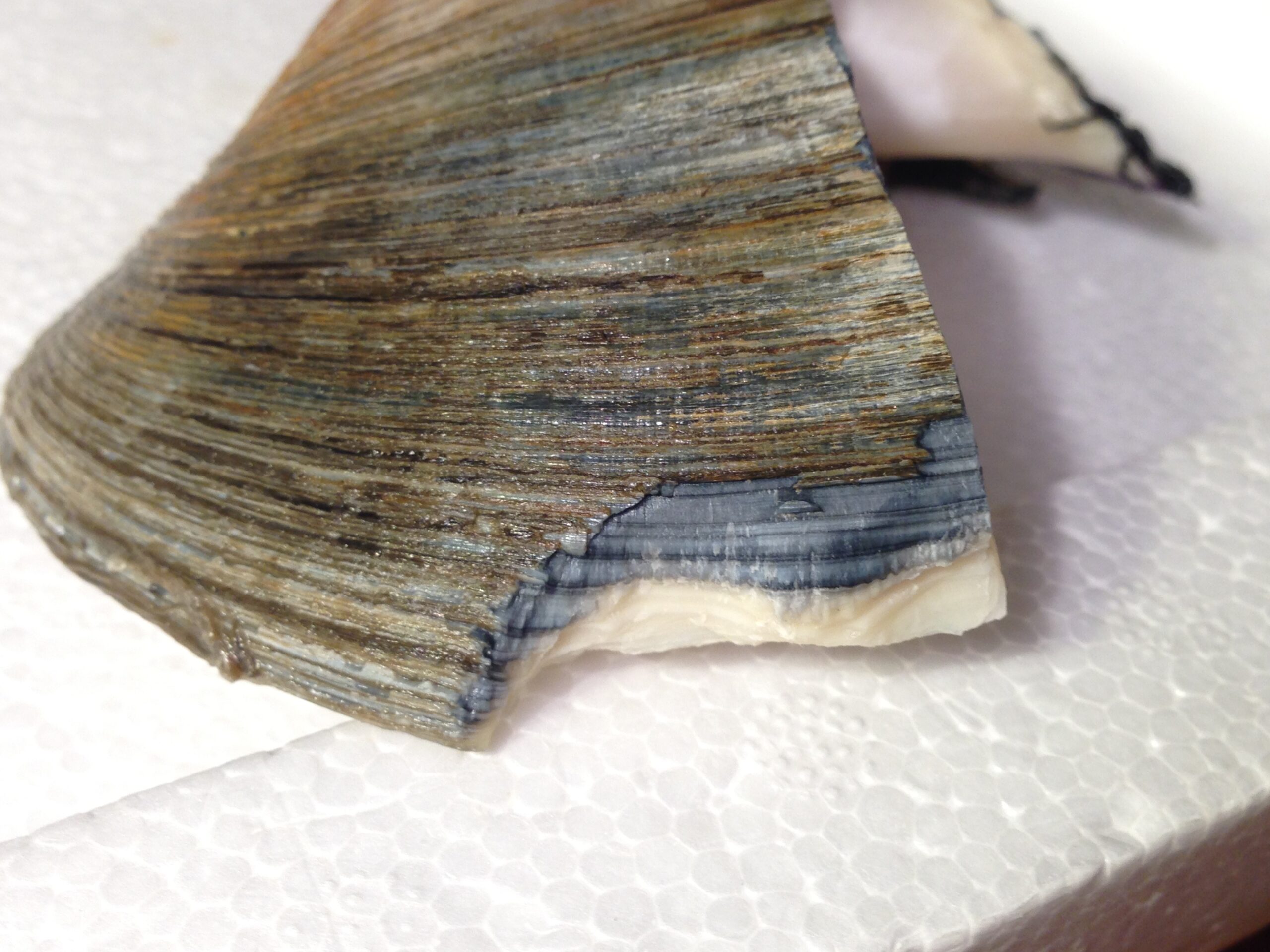
Shellfish are celebrated for their remarkable longevity and ecological importance, yet their growth, respiratory, and water filtration mechanisms remain underexplored in terms of technological and engineering applications. This study investigates these aspects, inspired by the discovery of an unusually large shellfish at Winger Seek Beach, to bridge marine biology with innovative solutions in environmental sustainability and bio-inspired engineering. Through a combination of advanced methodologies and experimental observations, this research uncovers original findings about shellfish physiology and highlights their potential for applications in water purification, respiratory device design, and environmental monitoring. To analyze the shellfish’s age and growth rate, growth rings on its shell were examined using adaptations of dendrochronological methods. These approaches provided precise age estimates of 23–27 years and refined existing techniques for interpreting growth patterns in long-lived marine organisms. This methodological advancement offers a valuable tool for studying other bivalves and contributes to understanding the slow-growth strategies associated with exceptional longevity in marine species. The findings highlight the role of shellfish as long-term recorders of environmental changes, opening pathways for their use in studying historical oceanic conditions. The respiratory mechanisms of the shellfish were analyzed by focusing on the structure and function of its gills. High-resolution imaging and computational modeling revealed how the extensive folding and microstructural organization of gill surfaces maximize gas exchange efficiency while minimizing energy expenditure. This study provided fresh insights into the biomechanics of shellfish respiration, identifying features that are not only evolutionarily optimized but also relevant to bioengineering. These findings have direct implications for the development of artificial respiratory systems and gas-exchange materials for medical and industrial use.
The study of water expulsion processes involved controlled experiments to observe siphon activity and filtration rates. Shellfish demonstrated the ability to filter significant volumes of water efficiently, maintaining homeostasis through precise regulation of siphon movements. This adaptive capability ensures functionality under varying environmental conditions such as salinity and temperature changes. These findings underscore the potential for shellfish-inspired filtration systems in water treatment technologies, particularly in regions facing challenges like pollution or seasonal water scarcity. By mimicking the efficiency and adaptability of shellfish filtration, engineers can design dynamic systems that process water effectively in diverse conditions.
These findings highlight the broader ecological and technological significance of shellfish. As natural bioindicators, shellfish can provide real-time data on water quality, pollution levels, and the impacts of climate change. Integrating shellfish physiology into IoT-enabled environmental monitoring systems could enhance efforts to safeguard aquatic ecosystems. Furthermore, their longevity and resilience offer valuable insights for understanding the genetic and physiological mechanisms underlying aging, with potential applications in regenerative medicine and aging research. In conclusion, this study advances our understanding of shellfish biology through original findings in growth analysis, gill efficiency, and water expulsion mechanisms. By linking these insights to engineering and environmental technologies, this research demonstrates how shellfish-inspired innovations can address pressing societal challenges, including clean water access, pollution control, and medical device development. Future studies will focus on scaling these applications, exploring genetic adaptations in shellfish, and integrating their functions into bio-inspired designs for sustainable solutions.
December 28, 2025