
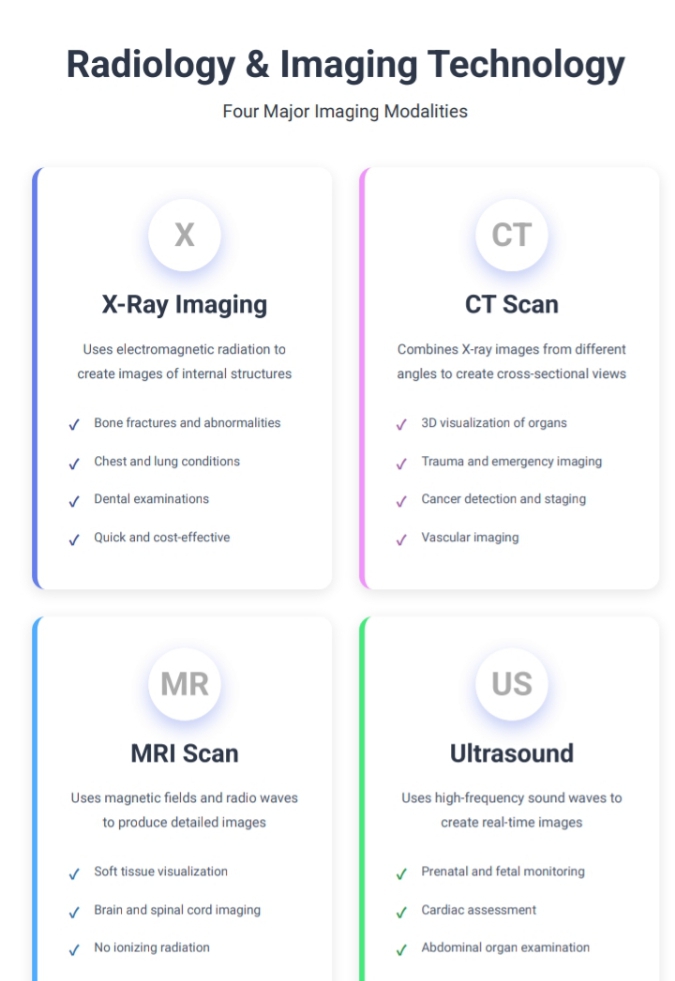
The discovery of X-rays by Wilhelm Conrad Roentgen in 1895 marked the foundation of modern medical imaging. This revolutionary finding allowed doctors to visualize internal body structures without surgery, greatly improving diagnosis and patient care. From this beginning, radiology has continuously evolved with the development of advanced imaging modalities such as computed tomography (CT), magnetic resonance imaging (MRI), ultrasound, and nuclear medicine, providing detailed anatomical and functional information.
With technological advancement, radiology shifted from film-based imaging to digital systems. The introduction of Picture Archiving and Communication Systems (PACS) and teleradiology improved image storage, reporting, and accessibility, making diagnostic services faster and more efficient. In recent years, artificial intelligence (AI) and robotics have further transformed the field of healthcare. AI assists radiologists in image interpretation, disease detection, and clinical decision-making, while robotic systems enhance precision in image-guided procedures, interventional radiology, and patient positioning.
This presentation aims to explain, in a simple and understandable manner, the journey of medical imaging from the era of Roentgen’s X-rays to modern robotic and AI-assisted technologies. It highlights the role of innovation in improving diagnostic accuracy, reducing human error, and enhancing patient safety. Although challenges such as cost, training, and ethical concerns exist, the combination of human expertise with advanced technology represents the future of healthcare. The transition from Roentgen to robotics reflects a significant shift toward smarter, safer, and more efficient medical practice.