
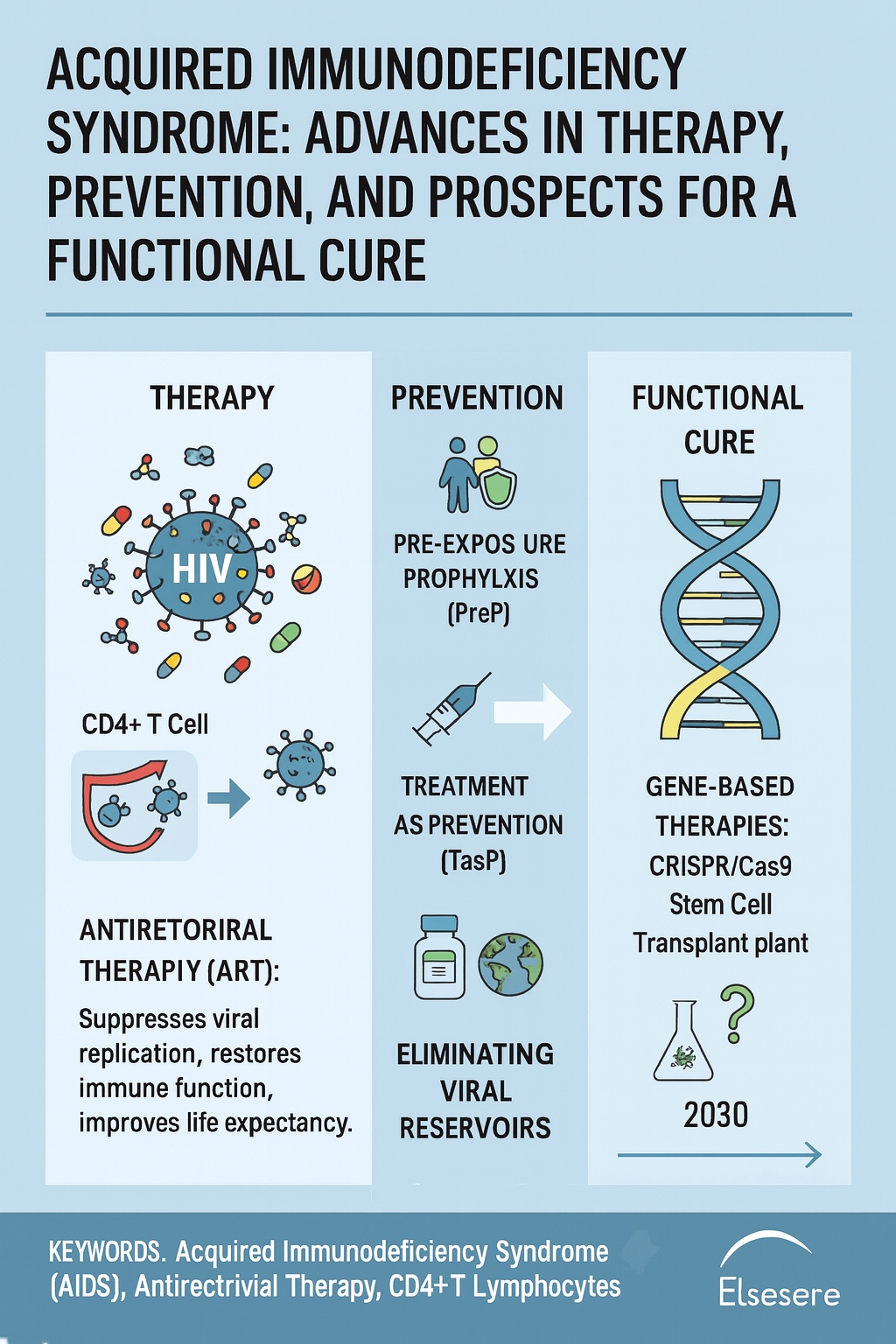
Acquired Immunodeficiency Syndrome (AIDS) is a life-threatening condition caused by the Human Immunodeficiency Virus (HIV), which primarily targets CD4 immune cells and progressively weakens the body’s defense against infections. HIV is transmitted through unprotected sexual contact, contaminated blood transfusions, shared needles, and mother-to-child transmission. As immune function declines, affected individuals become highly susceptible to opportunistic infections such as tuberculosis and pneumonia, as well as certain malignancies. Although there is no definitive cure for HIV/AIDS, antiretroviral therapy (ART) has transformed disease management by suppressing viral replication, restoring immune function, and significantly improving life expectancy. However, lifelong ART is associated with challenges including drug toxicity, adherence issues, and the persistence of latent viral reservoirs. To overcome these limitations, novel therapeutic strategies are being explored, including gene-based approaches such as CRISPR/Cas9 editing, stem cell transplantation, and latency-reversing or silencing techniques aimed at eliminating viral reservoirs. Advances in immunotherapy, therapeutic and preventive vaccines, pre-exposure prophylaxis (PrEP), and treatment as prevention (TasP) have further expanded prevention and treatment options. Continued research efforts focus on achieving a functional cure, improving safe and scalable delivery methods, and ensuring accessibility in resource-limited settings. Together, these innovations offer promising pathways toward ending the global HIV epidemic by 2030.
December 28, 2025