
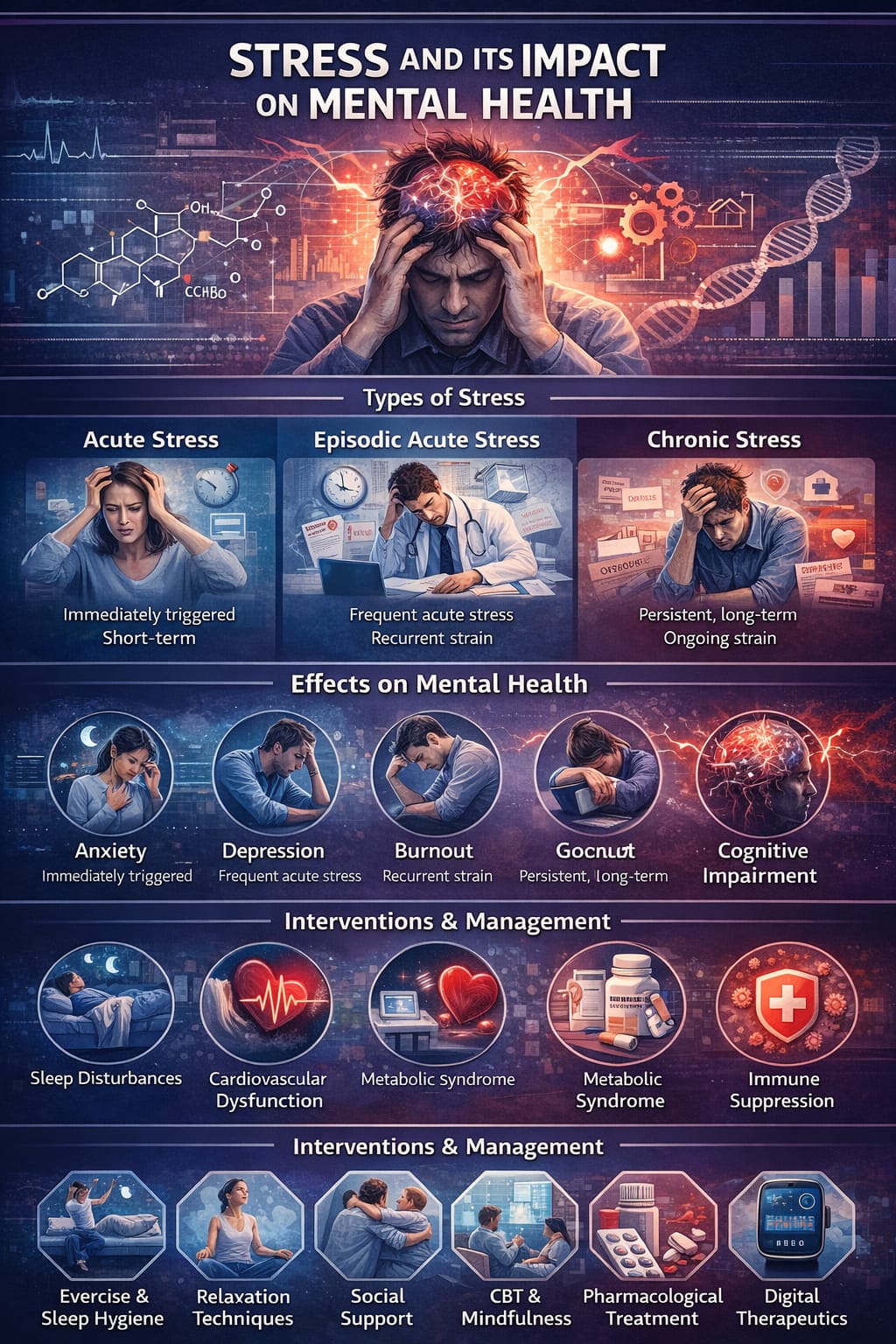
Stress is a ubiquitous physiological and psychological response to perceived challenges or threats, and while adaptive in moderation, its chronic manifestation poses significant risks to mental health. This review summarizes current evidence on the typology, mechanisms, and consequences of stress, emphasizing its evolving relevance in the context of global mental health trends. Stress is broadly categorized into acute, episodic acute, and chronic forms, each with distinct etiologies and implications. Acute stress, though transient, can enhance alertness and performance; episodic acute stress—marked by recurrent tension—is prevalent among individuals in high-demand professions such as healthcare and emergency services. Chronic stress, the most deleterious form, is associated with sustained exposure to psychosocial stressors including financial instability, occupational strain, and relational discord. Emerging data from the World Health Organization (2025) and national health agencies underscore the link between prolonged stress and the onset of anxiety disorders, major depressive disorder, cognitive impairment, and burnout syndromes. Neurobiological studies reveal that chronic stress disrupts hypothalamic-pituitary-adrenal (HPA) axis regulation, impairs neurogenesis, and alters cortisol rhythms, contributing to emotional dysregulation and somatic symptoms such as fatigue, insomnia, and immune suppression. The economic and social burden of stress-related mental health conditions is amplified by reduced productivity, absenteeism, and impaired interpersonal functioning. Effective stress management requires a multidimensional approach, integrating behavioral interventions (e.g., mindfulness, cognitive-behavioral therapy), lifestyle modifications (e.g., physical activity, sleep hygiene), and social support systems. Recent policy frameworks advocate for community-based mental health services, workplace wellness programs, and digital mental health platforms to enhance accessibility and resilience. In conclusion, stress remains a pivotal determinant of mental health across the lifespan. Its mitigation through evidence-based strategies and systemic reforms is essential to advancing global mental well-being and reducing the long-term burden of psychiatric morbidity.
December 25, 2025
Stress and Its Impact on Mental Health: A Contemporary Perspective
Authors List :
Amtul Mubeen Tahura, Humera Quadriya, Shagufta Tarannum, Fehmida Begum, Majid Mohiuddin
Presenting Author :
Amtul Mubeen Tahura
Affiliations :
Anwarul Uloom College
Email :
ammarshaik29@gmail.com
Key Words (5 Words Maximum) :
Cognitive-behavioral therapy, Hypothalamic-pituitary-adrenal (HPA), Financial Stability, Insomnia, Psychosocial Stress