
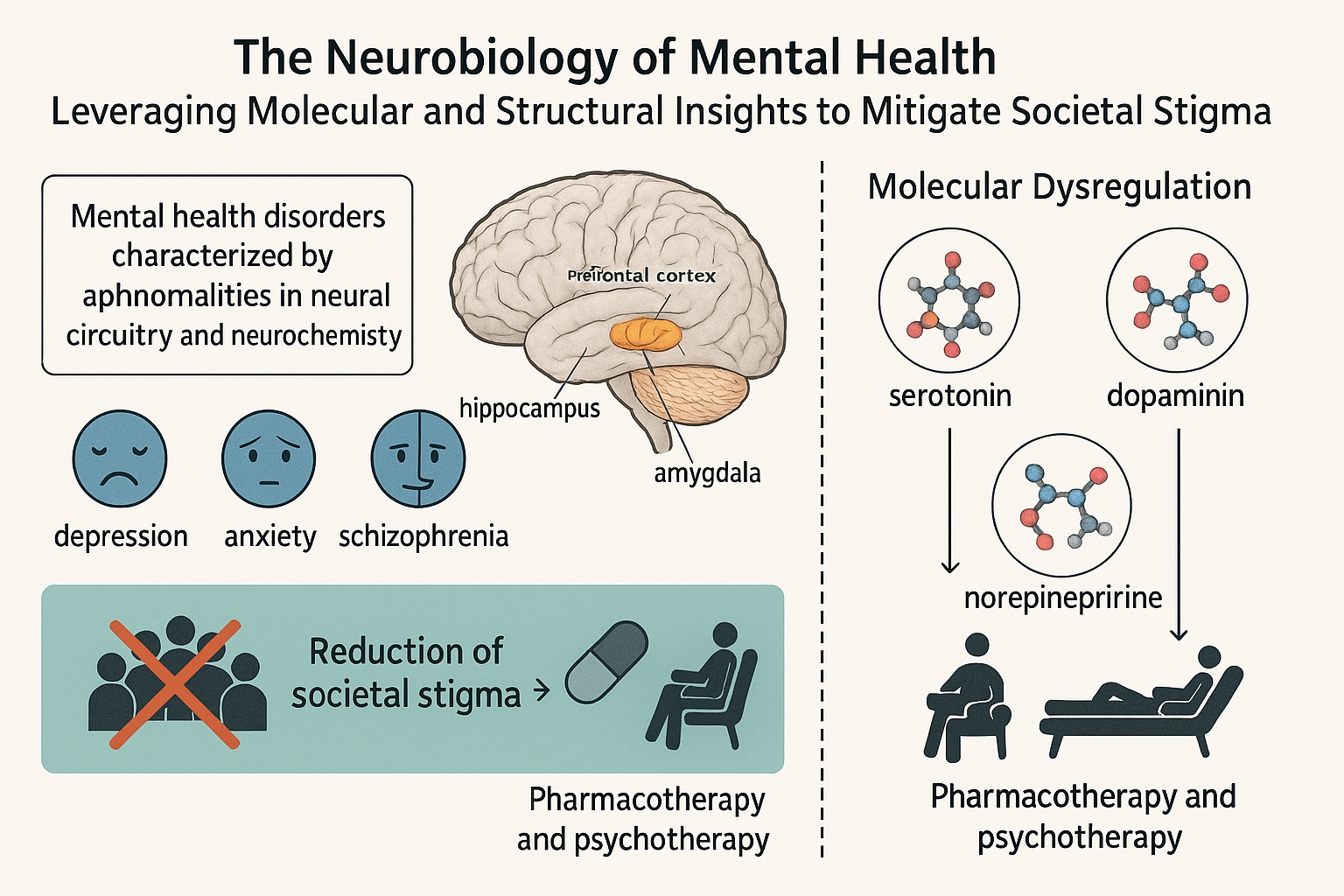
Mental health disorders represent a primary driver of the global disease burden, yet clinical outcomes are frequently hindered by pervasive societal stigma and diagnostic delays. This paper examines the role of neurobiological advancement in reframing psychiatric pathologies as legitimate physiological conditions, thereby bridging the gap between clinical science and public perception. A synthesis of current literature indicates that major depressive disorder, anxiety, schizophrenia, and bipolar disorder are characterized by quantifiable aberrations in neural circuitry and neurochemical homeostasis. Specifically, functional imaging reveals structural remodeling in the prefrontal cortex, hippocampus, and amygdala. At the molecular level, dysregulation of the monoamine neurotransmitter systems—specifically serotonin, dopamine, and norepinephrine—is fundamental to the symptomatic expression of these disorders. Furthermore, the etiology of mental illness is shown to be a multi-scalar phenomenon, involving genetic polymorphism, neuroinflammation, and HPA-axis dysfunction triggered by chronic environmental stress. Transitioning the narrative from “behavioral weakness” to “biological dysfunction” is essential for reducing discrimination. Integrating neurobiological education into public health frameworks encourages early intervention and promotes a dual-modality approach of pharmacotherapy and psychotherapy. These scientific insights are critical for transforming societal attitudes and improving the trajectory of care for affected populations
December 28, 2025