
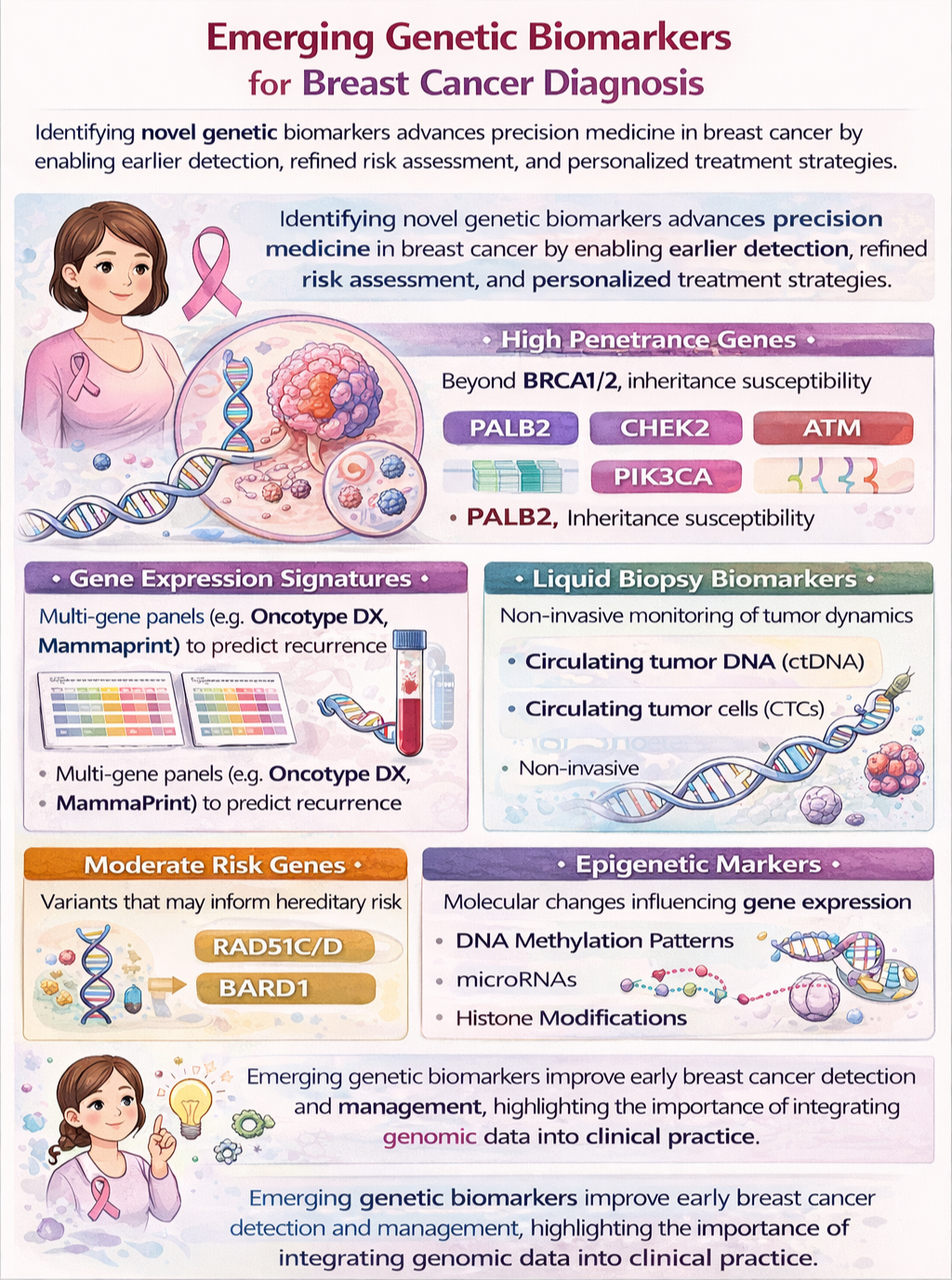
Breast cancer is a complex and heterogeneous disease, and early detection is crucial for improving patient outcomes. Recent advances in genomic technology have facilitated the identification of emerging genetic biomarkers that extend beyond traditional markers such as BRCA1 and BRCA2. BRCA1 and BRCA2 have limitations in identifying high risk individuals and predicting treatment responses. This review synthesizes current research on novel candidate change and genetic alternation that demonstrate potential clinical relevance in brief cancer diagnosis and management. This shift is unable more accurate early detection,refined risk satisfaction and the development of high personalized treatment strategies. Emerging research synthesizes a wide array of new candidate genes and molecular signatures with significant potential for clinical integration. Liquid biopsy biomarkers:Circulating tumor DNA (ctDNA), circulating tumor cells (CTCs), offer non- invasive real time monitoring of tumor dynamics. High penetrance genes:Beyond BRCA1/2, genes like PALB2, CHEK2,ATM and PIK3CA, which contribute to inherited suspectibility and Hereditary breast cancer risk.Moderate risk genes:Variants in genes like RAD51C/D and BARD1 my inform risk satisfaction.Gene expressions signatures:Multi gene panels (e.g., oncotype DX, Mamma Print) predict recurrence risk and guide treatment decisions. Epigenetic markers:DNA methylation patterns, microRNAs and histone modifications are emerging as potential diagnostics. Emerging genetics hold significant potential for refining this cancel diagnosis and management and emphasize the importance of integrating genomic data into clinical practice to advance precision medicine increase cancer care.
December 28, 2025