
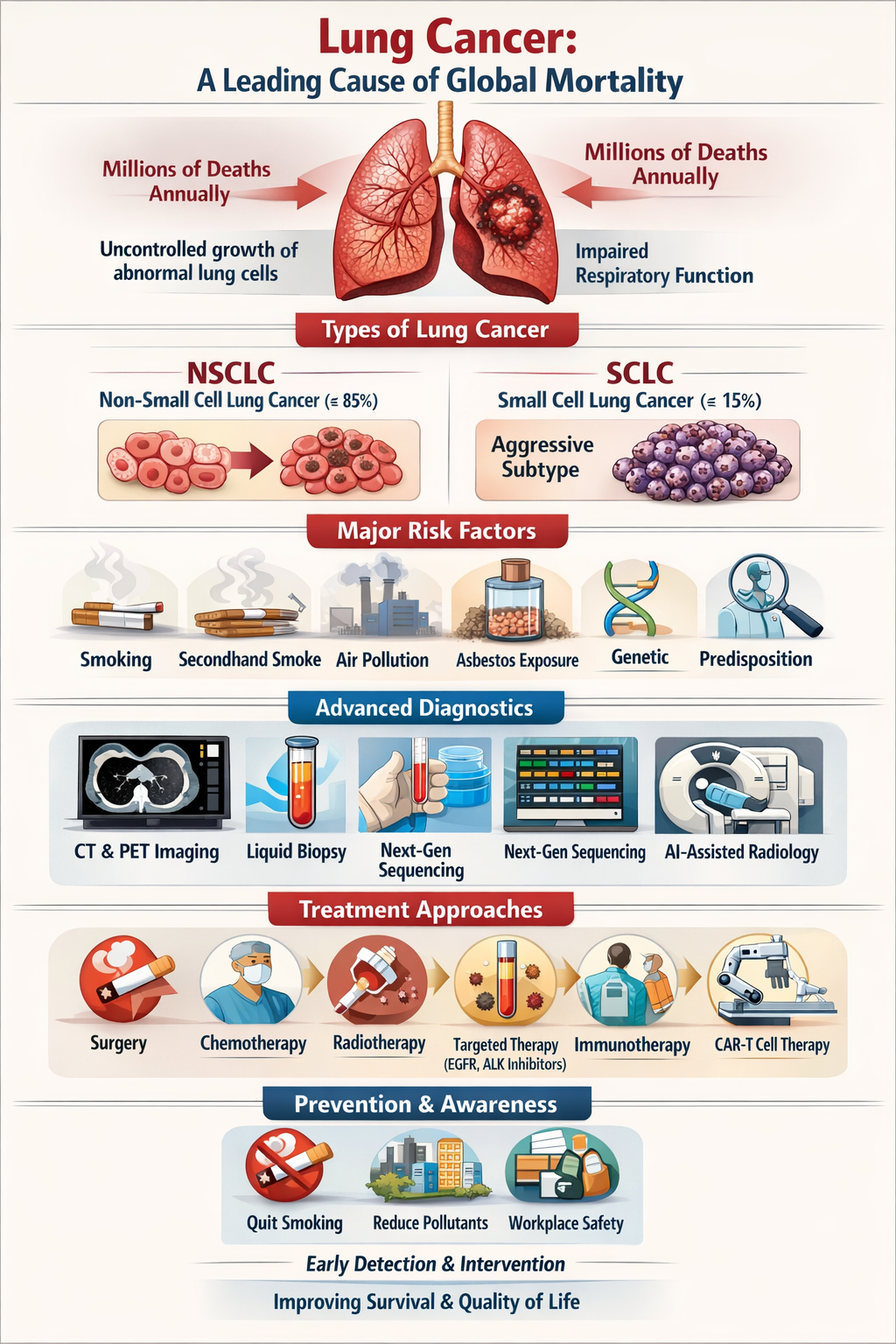
Lung cancer is among the most common and lethal malignancies worldwide, responsible for millions of deaths annually. It arises from uncontrolled proliferation of abnormal lung cells, leading to tumor formation that impairs respiratory function. The disease is classified into non‑small cell lung cancer (NSCLC), which accounts for most cases, and small cell lung cancer (SCLC), a highly aggressive subtype. Major risk factors include cigarette smoking, secondhand smoke, air pollution, occupational exposures such as asbestos, and genetic predisposition. Modern diagnostic approaches—high‑resolution imaging, liquid biopsy for circulating tumor DNA, next‑generation sequencing (NGS), and artificial intelligence–assisted radiology—enable earlier detection and identification of actionable genetic alterations. Treatment strategies depend on tumor type, stage, and patient comorbidities. Conventional modalities such as surgery, chemotherapy, and radiotherapy remain central. Advances in targeted therapies (EGFR and ALK inhibitors), immune checkpoint inhibitors, CAR‑T cell therapy, and robotic‑assisted surgery have significantly improved survival and quality of life. Combination regimens integrating immunotherapy with chemotherapy or radiotherapy further enhance therapeutic efficacy. Despite substantial progress in detection and treatment, lung cancer continues to pose a global health burden. Prevention through smoking cessation, reduction of environmental and occupational risks, and awareness of early symptoms remains essential to lowering incidence and improving long‑term outcomes.
December 28, 2025