
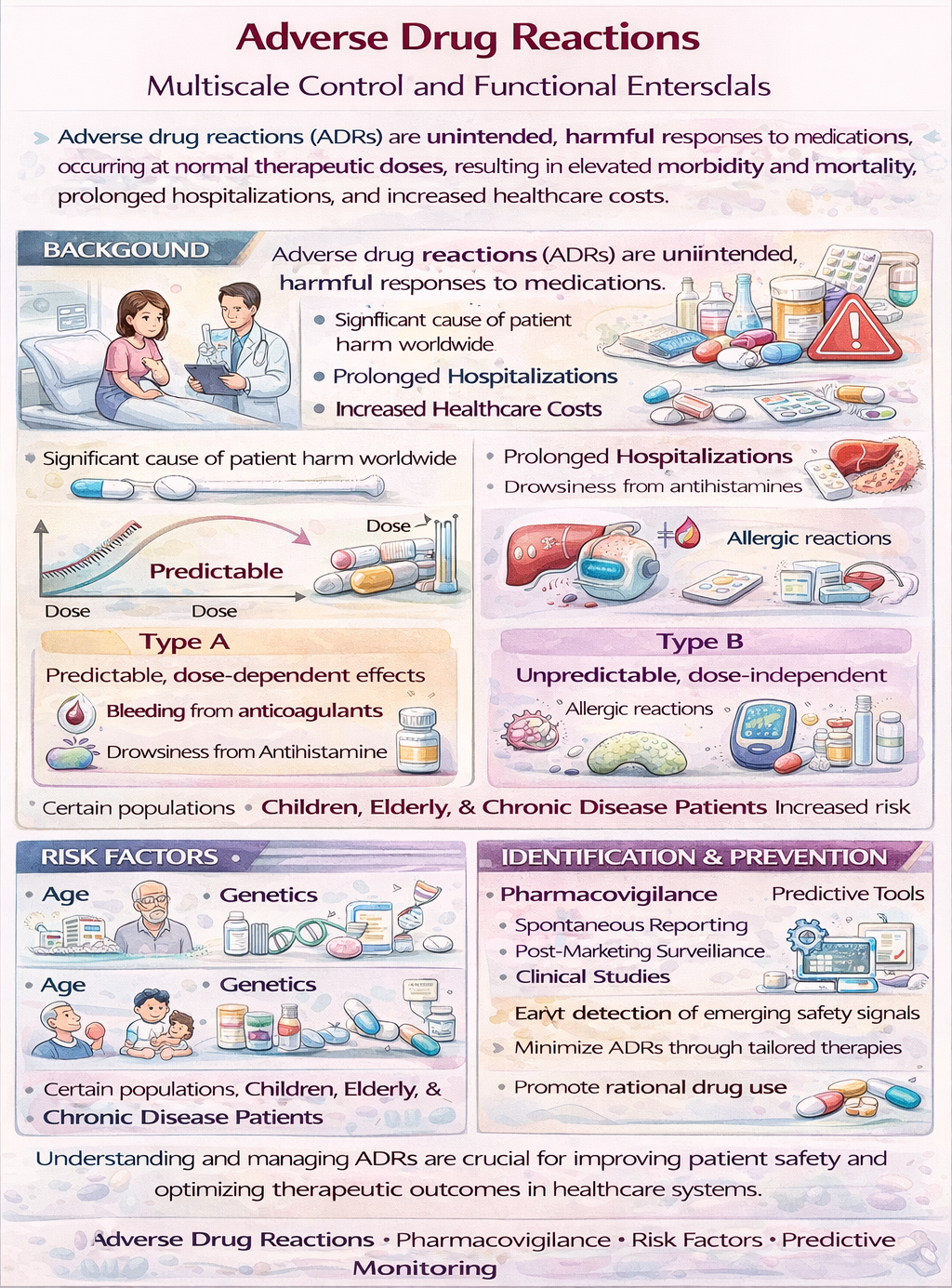
Adverse drug reactions (ADRs) are unintended, harmful responses to medications occurring at normal therapeutic doses and represent a significant challenge in clinical practice and public health. They contribute substantially to patient morbidity, mortality, prolonged hospital stays, and increased healthcare costs worldwide. ADRs may arise due to predictable, dose-dependent effects related to a drug’s pharmacological action (Type A reactions) or unpredictable, dose-independent effects such as hypersensitivity or idiosyncratic responses (Type B reactions). Several factors influence the occurrence of ADRs, including age, genetic predisposition, comorbidities, polypharmacy, and drug–drug interactions. In vulnerable populations such as children, the elderly, and patients with chronic diseases, the risk of ADRs is particularly high. Effective identification, assessment, and prevention of ADRs are therefore critical components of patient safety. Pharmacovigilance systems play a central role in monitoring ADRs through spontaneous reporting, post-marketing surveillance, and clinical studies, enabling early detection of safety signals and regulatory interventions. Healthcare professionals have a vital responsibility to recognize, document, and report suspected ADRs to improve drug safety profiles. Advances in pharmacogenomics and data-driven monitoring tools offer promising strategies for predicting and minimizing ADRs in the future. Overall, understanding ADRs is essential for optimizing therapeutic outcomes, enhancing patient safety, and promoting rational drug use in modern healthcare systems.
December 28, 2025