
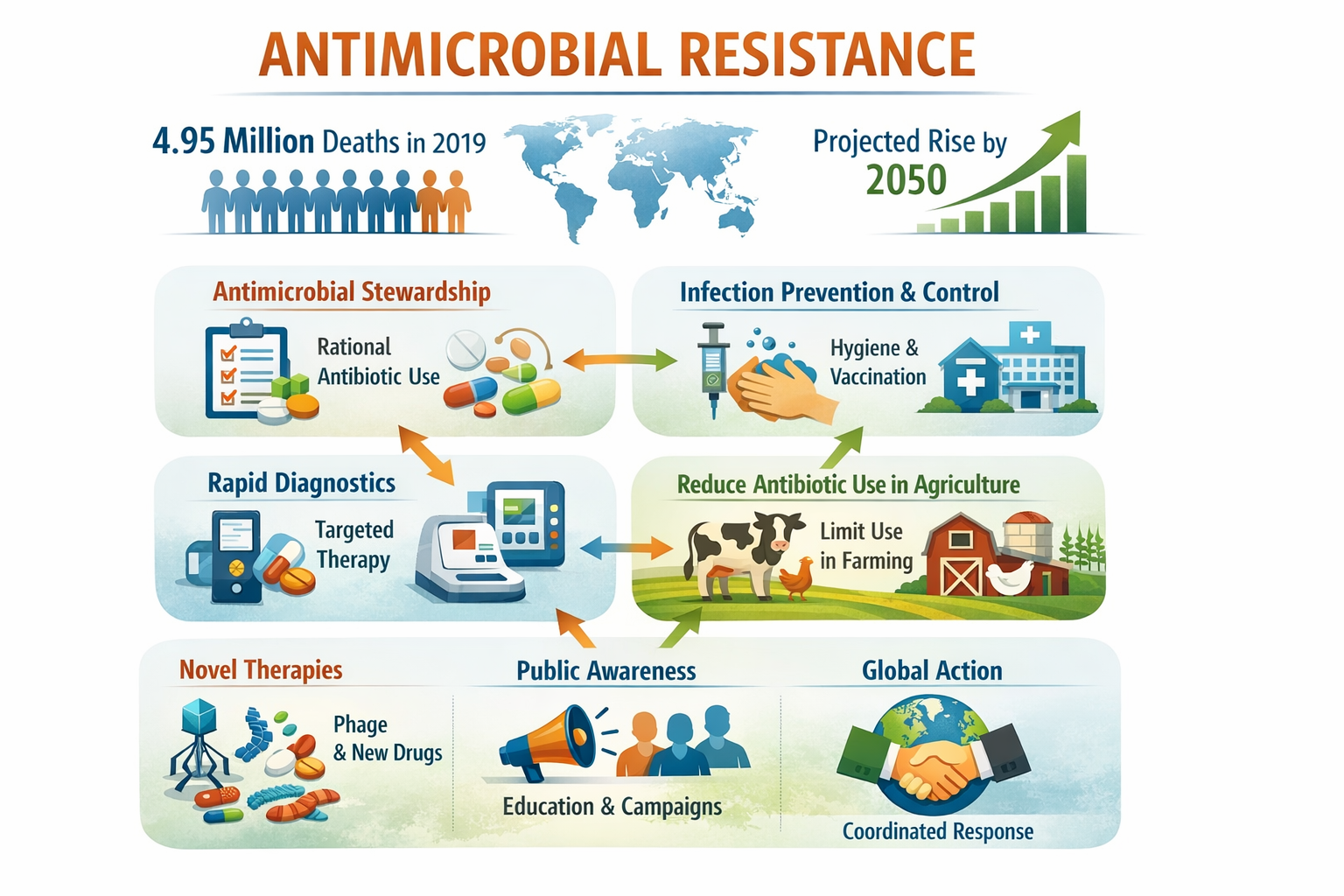
Antimicrobial resistance (AMR) has emerged as one of the most pressing global health challenges, threatening the efficacy of antibiotics and undermining decades of medical progress. Recent estimates suggest that AMR accounted for nearly 4.95 million deaths worldwide in 2019, with projections indicating a substantial rise by 2050 if urgent interventions are not implemented. Tackling this crisis requires a multifaceted and coordinated approach across healthcare systems, research communities, agriculture, and the public sphere. Antimicrobial stewardship programs (ASPs) remain central to mitigating resistance, ensuring rational prescribing, appropriate dosing, and adherence to treatment regimens. Complementary strategies include strengthening infection prevention and control measures, such as vaccination, hand hygiene, and hospital-based protocols, which collectively reduce the demand for antibiotics. Advances in rapid diagnostic technologies are pivotal, enabling clinicians to tailor therapies and minimize reliance on broad-spectrum agents. Beyond clinical settings, restricting antibiotic use in agriculture and animal husbandry is critical to curbing the transmission of resistant strains across ecosystems. Parallel to stewardship, research into novel therapeutics—including bacteriophage therapy, antimicrobial peptides, and drug combinations—offers promising alternatives to conventional antibiotics. Public engagement through awareness campaigns and education is equally vital, discouraging misuse and self-medication. Ultimately, a sustainable, globally coordinated response integrating stewardship, innovation, and public health measures is essential to preserve antibiotic effectiveness and safeguard future generations.
December 28, 2025