
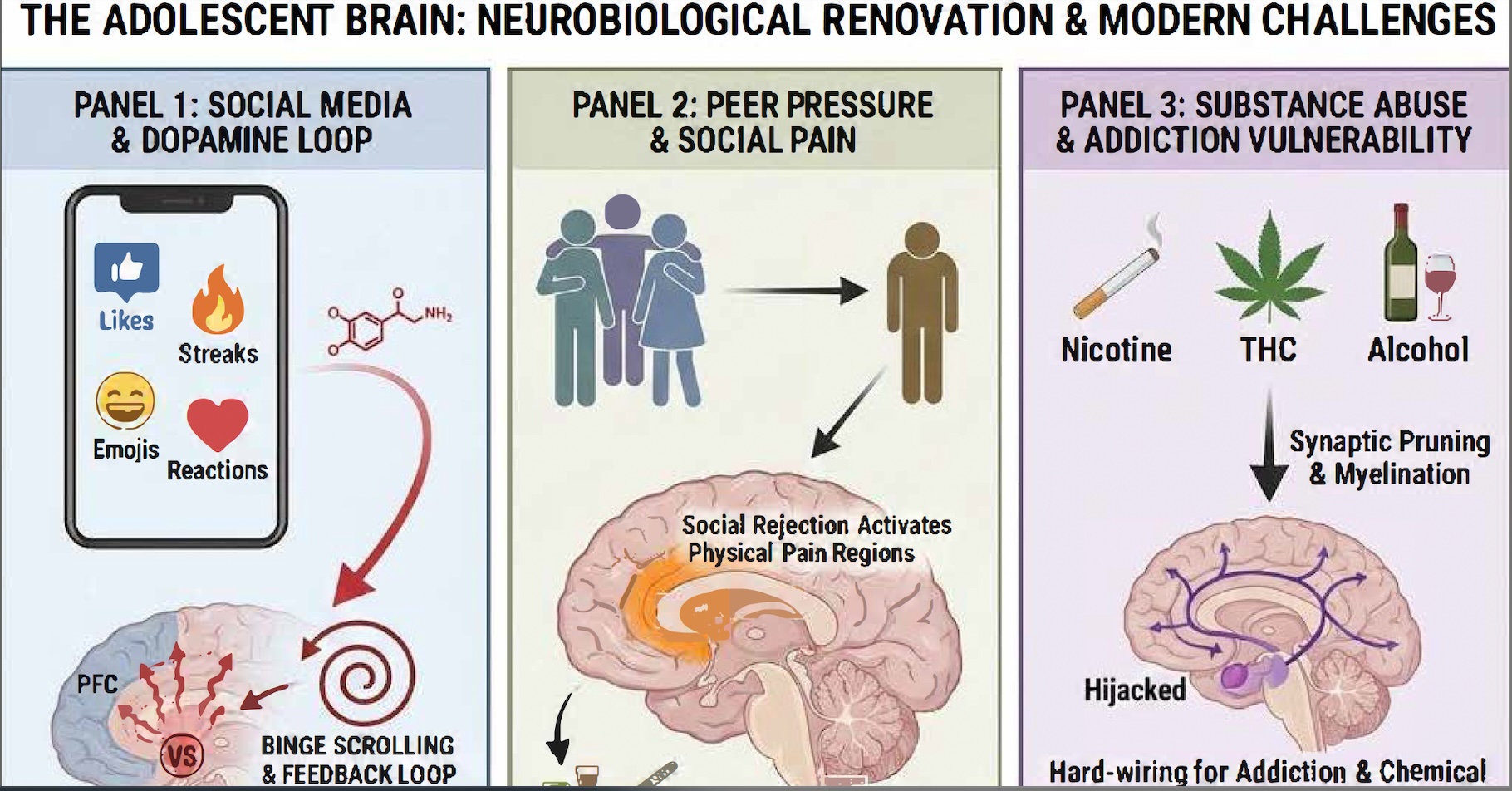
The transition from childhood to adulthood is marked by a profound neurological renovation that renders the adolescent brain both exceptionally plastic and uniquely vulnerable. This discussion explores the intersection of pubertal neurobiology with the modern digital landscape, specifically examining how social media, and current societal challenges influence the developing teenage/young adult mind. There exists significant developmental mismatch between the subcortical limbic system, responsible for emotional processing and reward-seeking, and the prefrontal cortex (PFC), responsible for executive function and impulse control which remains under construction until the mid-twenties, explaining the heightened emotional reactivity and increased sensation-seeking characteristic of puberty. Social media platforms are engineered to exploit this neural vulnerability. Likes, Streaks, Emojis, Reactions and infinite scrolling function trigger surges of dopamine in the ventral striatum (VS), leading to binge scrolling creating a feedback loop where the brain’s reward system overrides the PFC’s ability to disengage, leading to a state of cognitive depletion and diminished self-regulation. Neurobiologically, peer rejection activates the same brain regions as physical pain (the anterior cingulate cortex). Consequently, the adolescent brain is hyper-tuned to peer pressure and the need for social validation. The desire for social conformity is driven by a need to maximize neural rewards associated with self-esteem. In the digital sphere, this manifests as a constant, exhausting pressure to curate a perfect online persona, often at the expense of authentic emotional development. Conversely, the fear of social exclusion serves as a potent driver of behavioral aberrations. Neuroimaging shows that social rejection activates the anterior cingulate cortex and the insula, the same regions responsible for processing physical pain. To avoid this distress, the young brains may prioritize matching expectations of the group like engaging in binge drinking or vaping, as a survival mechanism to maintain social inclusivity. The neurobiology of substance abuse is particularly dangerous during this window since the adolescent brain is still undergoing synaptic pruning and myelination. Substances like nicotine, THC, and alcohol hijack the still-developing dopamine pathways, potentially hard-wiring the brain for addiction more effectively than in adults. Puberty-driven changes in the amygdala lead to heightened emotional volatility. When combined with the stress of social hierarchies, adolescents and young adults may turn to substances as a form of chemical coping to manage social anxiety or the pressure to perform, creating a dangerous feedback loop. Hence understanding that the teenage/adolescent brain is critical towards designing interventions that focus on strengthening inhibitory control and fostering positive reinforcement that reward healthy decision-making towards the greater goals of life.
December 28, 2025