
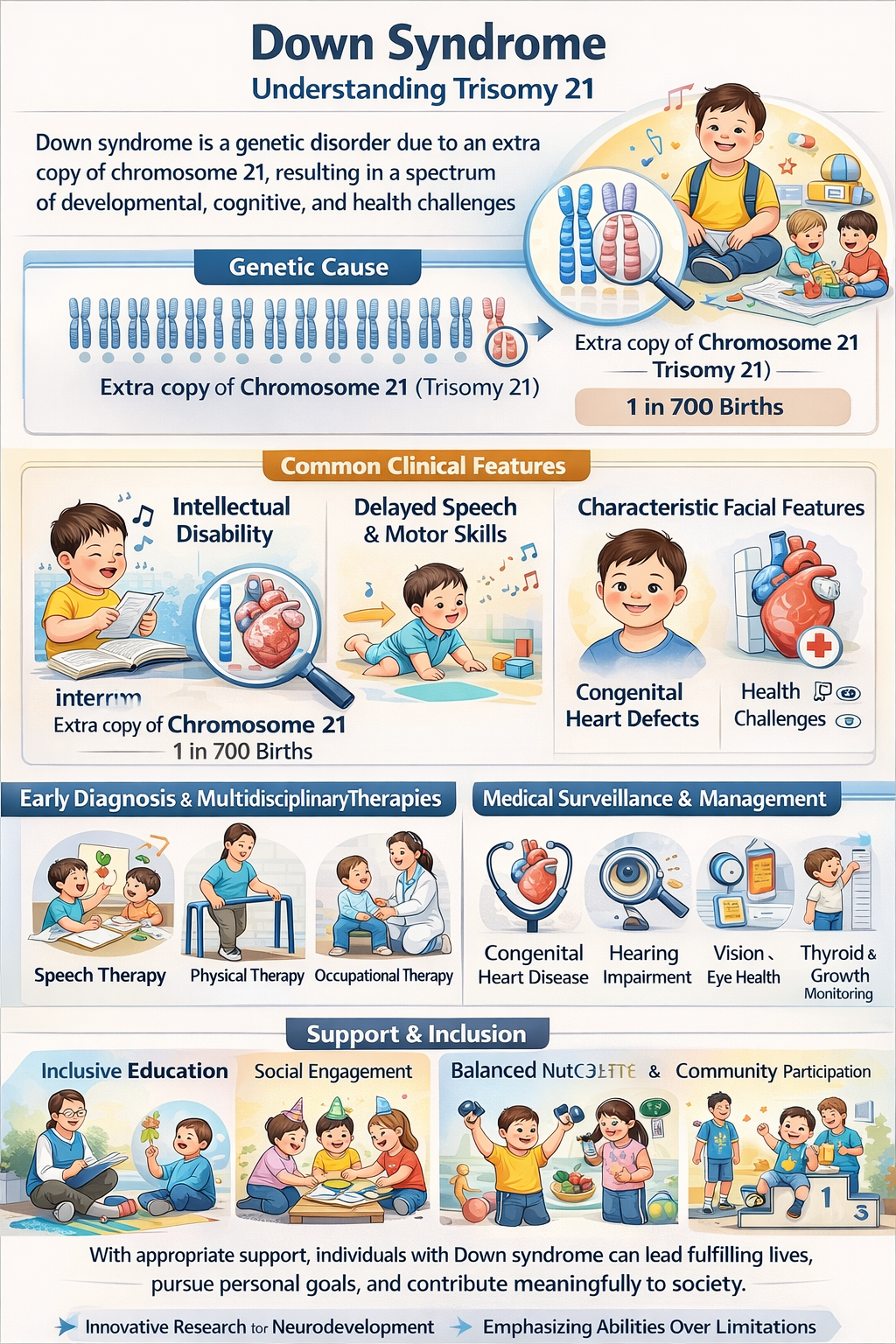
Down syndrome is a genetic disorder caused by the presence of an extra copy of chromosome 21, leading to a spectrum of developmental, cognitive, and health-related challenges. Individuals with Down syndrome exhibit unique strengths and variability in learning, communication, and physical development. Common clinical features include intellectual disability, delayed speech and motor milestones, and congenital anomalies—particularly cardiac defects. Early diagnosis and intervention are critical to optimizing outcomes. Multidisciplinary therapies—including speech, physical, and occupational therapy—play a pivotal role in enhancing functional independence and quality of life. Regular medical surveillance is essential for managing associated conditions such as congenital heart disease, hearing impairment, and ophthalmologic issues. Inclusive education, social engagement, and community participation foster self-esteem and personal growth. Advances in research are exploring novel therapeutic strategies to support neurodevelopment and overall health. Lifestyle factors—such as balanced nutrition, physical activity, and psychosocial support—further contribute to well-being. With appropriate support systems and opportunities, individuals with Down syndrome can lead fulfilling lives, pursue personal goals, and contribute meaningfully to society. Emphasizing ability over limitation is key to promoting autonomy, dignity, and social inclusion.
December 28, 2025