
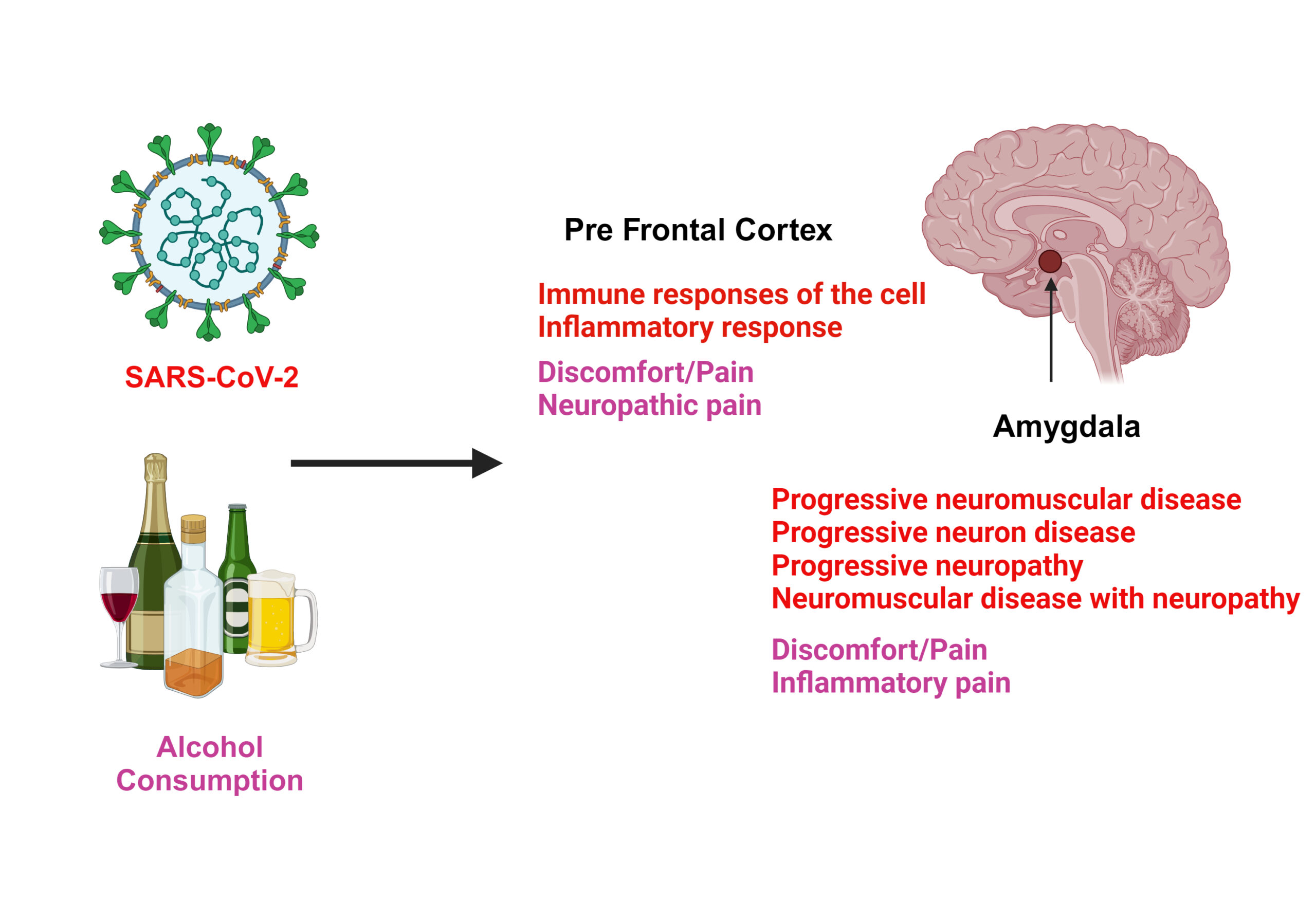
Case reports have shown that a significant population of COVID-19 patients developed chronic pain. However, the mechanisms underlying the onset and progression of pain during COVID-19 are under studied. Using network meta-analysis, we previously demonstrated alcohol augmentation of COVID-19 pathologies. Previous reports suggest alcohol consumption exaggerates COVID-19 symptoms including severe cytokine storm and may even result in mortality. We and others have also reported that acute alcohol consumption produces analgesic effects while chronic alcohol consumption results in chronic pain and hyperalgesia. This study aimed to identify the influence of alcohol consumption and COVID-19 on pain including neuropathic pain and inflammatory pain. By studying various GSE datasets, the Differentially Expressed Genes (DEGs) in the Prefrontal Cortex (PFC), Amygdala (Amg), Choroid plexus (CP), and midbrain of COVID-19 patients were collected. We then employed QIAGEN Ingenuity Pathway Analysis (IPA) to identify the key signaling pathways, upstream regulators, and biological functions associated with these DEGs in the different brain areas of the COVID-19 patients. The canonical pathway analysis revealed that the activation pathogen induced cytokine storm signaling pathway, S100 Family Signaling Pathway, IL-6 Signaling, neuroinflammation signaling pathway and neuropathic pain signaling in dorsal horn neurons were identified in each of the brain regions examined. IPA’s network builder was employed to construct a network map between ethanol (EtOH) and pain related entities including pain, neuropathic pain, and inflammatory pain using referring to the QIAGEN Knowledge Base (QKB). Simulation activation of EtOH, mimicking alcohol consumption, was found to inhibit pain. To study the influence of COVID-19, we overlayed the DEGs from the PFC, Amg, CP, and midbrain onto these networks, mimicking alcohol consumption during COVID-19. These two-analysis showed neuropathic pain were enhanced in the Amg, midbrain, CP while inflammatory pain was enhanced in the PFC and CP. Taken together, we have found that COVID-19 modulation of signaling pathways associated with neuropathic pain, inflammatory pain or pain was brain area specific. Previously, we demonstrated anti-nociception of binge alcohol consumption. However, in the course COVID-19, alcohol consumption was shown to exaggerate cytokine storm associated with chronic pain, inflammatory pain and neuropathic pain.
December 28, 2025