
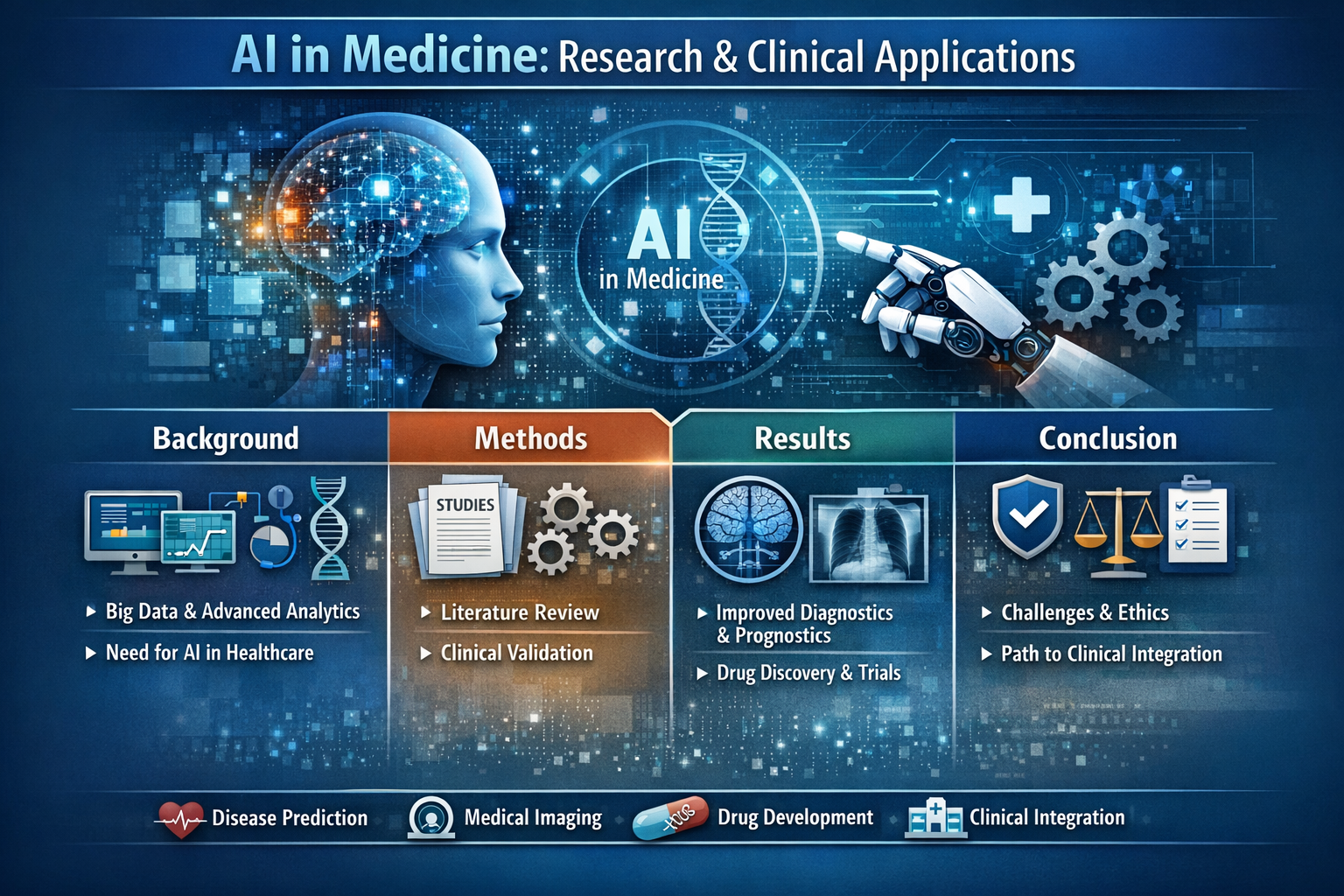
Background: Artificial intelligence (AI), including machine learning and deep learning methods, is increasingly applied in biomedical research and clinical care. The expansion of electronic health records, medical imaging, and molecular datasets has created a need for analytical approaches capable of generating clinically actionable insights, as reported in multiple NEJM-, Lancet-, and JAMA-indexed studies.
Methods: We reviewed peer-reviewed studies evaluating AI applications in diagnostics, prognostic modeling, and translational research, including retrospective analyses, prospective cohorts, and randomized or externally validated investigations. Emphasis was placed on multimodal data integration, validation methodology, and real-world clinical performance.
Results: Across oncology, cardiology, and neurology, AI-based models demonstrated improved performance in disease classification, risk stratification, and outcome prediction compared with conventional approaches in multicenter validation studies. In diagnostic imaging and digital pathology, AI systems achieved clinically relevant accuracy in detecting malignancies, retinal disease, fractures, and histopathologic features, with reduced interobserver variability. AI applications also showed benefit in drug discovery, clinical trial design, and patient selection.
Conclusion: Evidence from high-impact medical literature supports the research and clinical value of AI. Continued emphasis on validation, interpretability, bias mitigation, and regulatory oversight is required for safe and effective integration into clinical practice.
December 26, 2025
Artificial Intelligence in Medical Research and Clinical Practice
Authors List :
Mohammed Imran
Presenting Author :
Mohammed Imran
Email :
muhammed_immu@yahoo.com
Key Words (5 Words Maximum) :
Artificial Intelligence, Clinical Decision Support, Translational Medicine