
The growing challenges of climate change, environmental deterioration, and resource scarcity need a shift towards biological solutions. Microorganisms play a key role in preserving ecological balance and fostering sustainable growth through their various metabolic capacities. The concept of a beneficial microbial blueprint emphasizes the strategic identification, optimization, and deployment of functional microorganisms and their bioactive metabolites to address global concerns in agriculture, healthcare, industry, and the environment. Beneficial bacteria help to promote sustainable agriculture by cycling nutrients, fixing nitrogen, solubilizing phosphate, and controlling plant diseases, lowering the need for chemical fertilizers and pesticides. In healthcare and biotechnology, microbial secondary metabolites such as biosurfactants, bioactive pigments, enzymes and antibiotics provide sustainable alternatives with antibacterial, anticancer, and immunomodulatory therapeutic properties. Algae-derived substances, such as phycocyanin and polysaccharides from microalgae like Chlorella and Spirulina, have antiviral, neuroprotective and anti-inflammatory properties that can be used in the formulation of novel drugs. Furthermore, microbes are essential for ecological sustainability as they enable waste decomposition, bioremediation, and bioenergy production. Oleaginous algae such as Chlorella vulgaris efficiently convert biomass into precursors of bioethanol and biodiesel through fermentation pathways and lipid accumulation. Microbial fuel cells (MFCs) combine bioremediation with the generation of renewable energy by using electroactive bacteria that generate electricity directly from organic waste. Development in synthetic biology, omics technology including tools of artificial technology (AI) have significantly improved our capacity to harness microbial potential with increased specificity and efficiency. This talk will emphasize the use of beneficial bacteria as a sustainable blueprint for future innovations, boosting green technology and enhancing economic viability. Ultimately, orchestrating microorganisms to microbiomes will give a practical, effective, and sustainable strategy to accomplish the Sustainable Development Goals (SDGs) promoting resilience and guiding human development towards a harmonious coexistence on the planet earth.
December 21, 2025
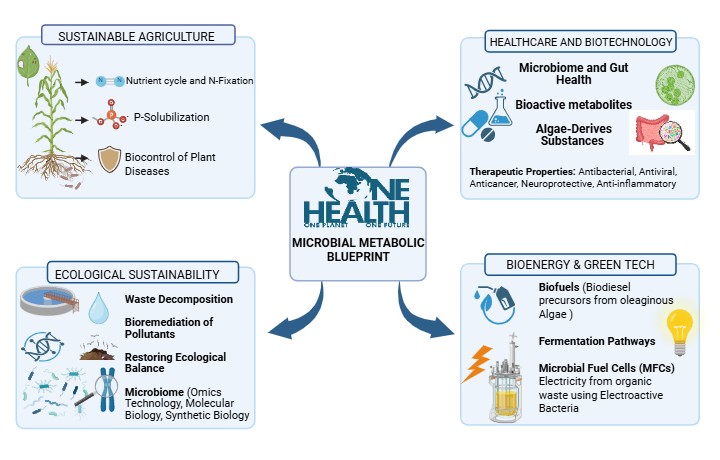
Beneficial Microbial Blueprint For Sustainable Future
Authors List :
Professor Hameeda Bee
Presenting Author :
Hameeda Bee
Affiliations :
Department of Microbiology, UCS, Osmania University
Email :
drhami2009@gmail.com
Key Words (5 Words Maximum) :
Microbes, Blue print, Health care, Agriculture, Environment, Sustainable