
Background:
Fish is one of the perishable-sensitive foods that leads to many foodborne illnesses and toxicity. The appropriate processing and storage conditions for fish play a significant role in their safety and perishability. Even deviations in the processing and subsequent cold-chain maintenance accelerate the spoilage followed by histamine development in marine products. In this study, the role of packaging conditions (Regular, Shrink, and Vacuum packaging) and storage temperature (5°C ± 3°C) on the quality of selected fish varieties was studied. The selected fish fillets are Red Snapper, Pomfret, and Cuttlefish.
Methodology:
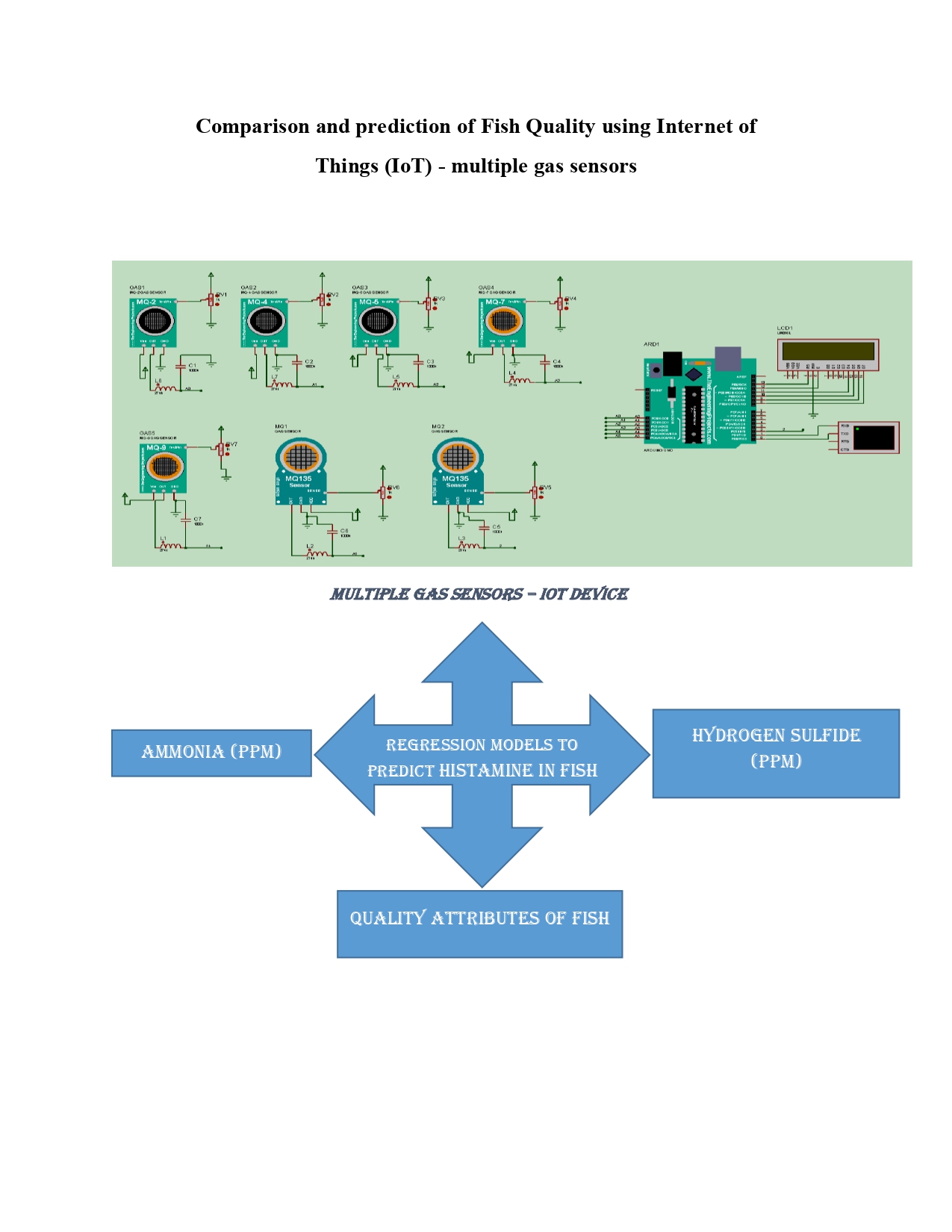
Multiple gas sensors to detect ammonia, hydrogen sulfide, carbon monoxide, methane, and butane were assembled in Arduino UNO is used as the microcontroller. Adafruit IO is the IoT to display data. PLX is used to store databases in the cloud. The MQ-135 and MQ-136 sensors measured the Ammonia and hydrogen sulfide content of packed fish. The basic quality attributes of fish fillets such as pH, protein content, fat content, Total Volatile Basic Nitrogen (TVB-N – a fish freshness indicator), color analysis, texture profile, and Fourier transform infrared (FTIR) spectroscopy analysis were performed as per standard procedures. The analysis was conducted on alternative days for 12 days in every packaging condition at refrigerated temperature for selected fish.
Results and Discussion:
There was a consistent increase in the TVB-N of fish at refrigerated temperatures in all packaging methods. The increase in TVB-N content could be because of the release of ammonia during the deamination of adenosine monophosphate (AMP) or histamine as the storage day increases. The results showed a positive correlation between MQ -135 and MQ-136 sensor data and the protein content based on nitrogen content and TVB- N. The FTIR results also showed the presence of common functional groups like Nitro compounds in a peak range of 1500-1550. The peak range of 1580-1650 and 2500-3300 signifies the functional group of amine and carboxylic acid respectively, indicating the developmental stage of histamine in the refrigerated fish samples packed in different packaging conditions. The fat content, pH, color, and texture profile of the samples also indicate the onset of loss of fish quality in the given conditions. The regression models indicate the positive correlation between the sensor data and analysis data to predict the stability of the packed fish.
December 28, 2025