
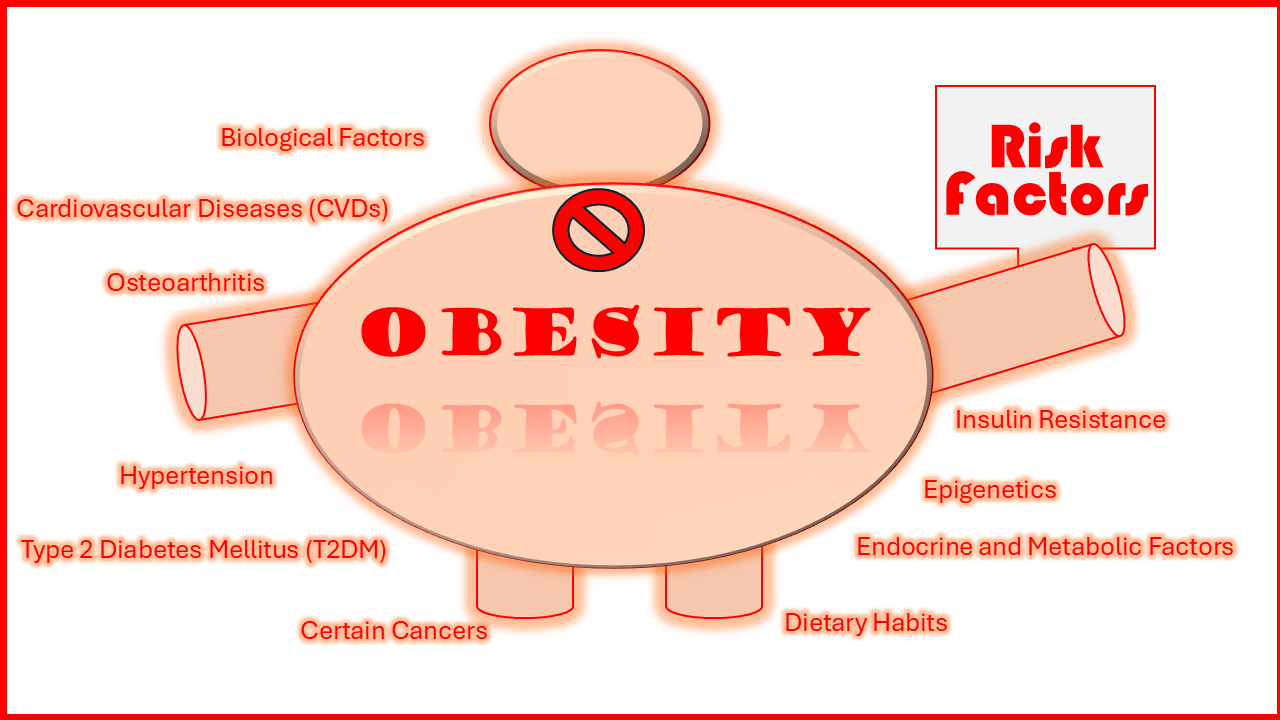
The prevalence of obesity has surged globally, becoming a significant public health challenge. According to recent findings from Global Burden of Disease (GBD) studies and World Health Organization (WHO) reports, obesity rates have nearly tripled since 1975. The latest global obesity statistics shows that in 2023, over 1 billion people worldwide were classified as obese, including: 650 million adults (≥18 years old); 340 million adolescents (5–19 years old) and 39 million children (<5 years old). The prevalence in countries like the United States and Saudi Arabia exceeds 40%.. Rapid urbanization and dietary shifts have escalated obesity rates in nations like India, China, and Brazil. Obesity is emerging as a problem in urban areas due to increased access to processed foods and sedentary lifestyles. Obesity is a complex condition influenced by a combination of genetic, behavioral, environmental, and physiological factors. Understanding these risk factors is crucial for developing effective prevention and management strategies. Below are the primary risk factors for obesity: (i) Type 2 Diabetes Mellitus (T2DM), (ii) Cardiovascular Diseases (CVDs), (iii) Hypertension, (iv) Osteoarthritis, (v) Certain cancers (e.g., breast, colon) (vi) Dietary Habits: (most important parameter), (vii) Endocrine and Metabolic Factors (Hormonal Imbalances: conditions like hypothyroidism, Cushing’s syndrome, and polycystic ovarian syndrome (PCOS) can slow metabolism and promote fat accumulation), (viii) Insulin Resistance (Hyperinsulinemia can lead to increased fat storage and weight gain, creating a vicious cycle of obesity and metabolic dysfunction), (ix) Biological Factors (Gut Microbiota: an imbalance in gut bacteria (dysbiosis) can influence energy metabolism and fat storage, increasing obesity risk), (x) Epigenetics (Environmental exposures during critical developmental periods can alter gene expression and predispose individuals to obesity). Obesity arises from an interplay of genetic susceptibility, unhealthy behaviors, and environmental factors. Targeting these risk factors through lifestyle modifications, policy changes, and individualized healthcare interventions is essential for prevention and management.
December 28, 2025