
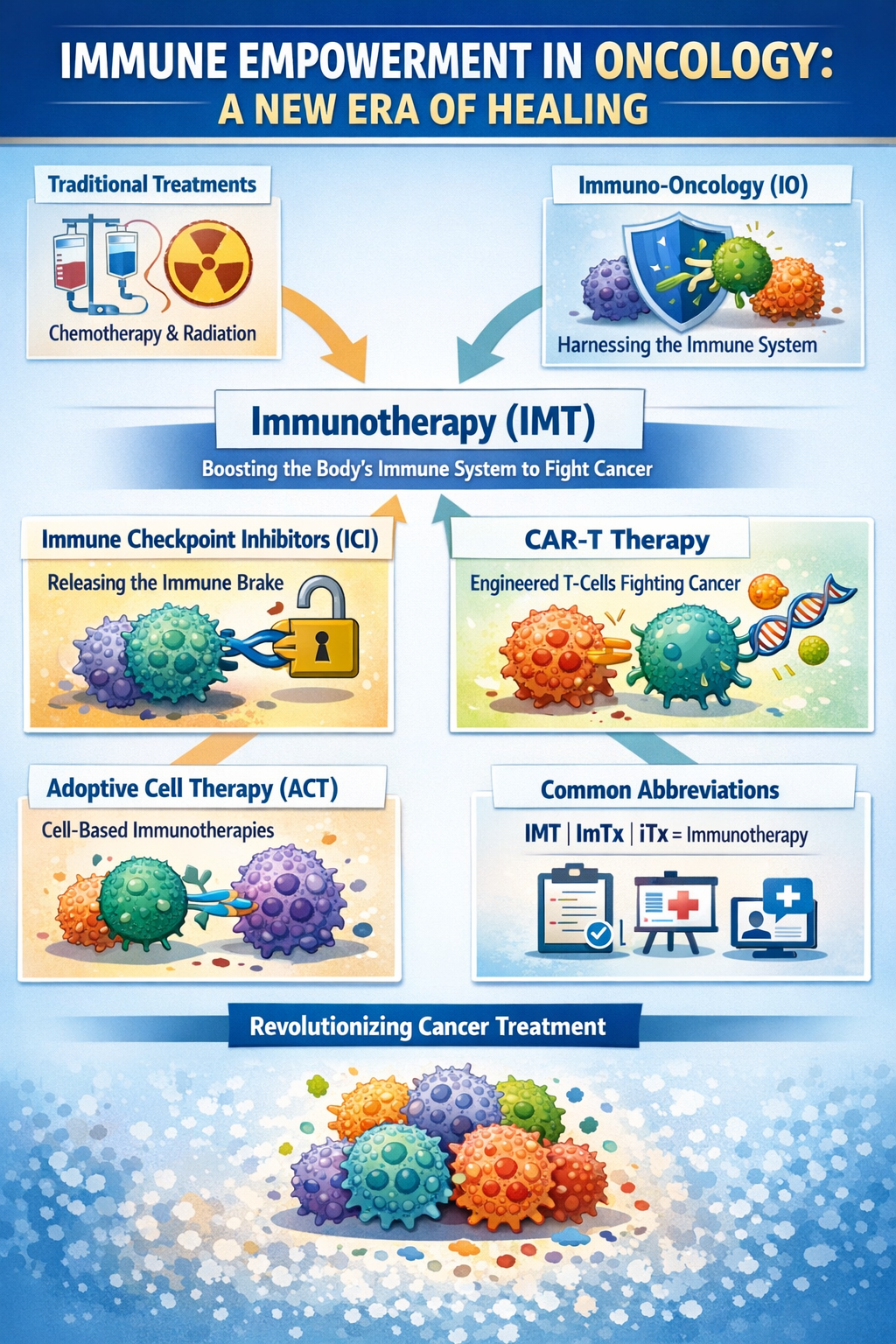
Immunotherapy, often abbreviated as IT, is a modern medical treatment that works by strengthening or modifying the body’s own immune system to fight against diseases, like cancer. Unlike traditional treatments such as chemotherapy or radiation, which directly target diseased cells but not precisely selective, immunotherapy helps the immune system recognize and attack harmful cells more effectively. Because of this unique approach, it has become one of the most promising advances in medical science. In cancer treatment, immunotherapy is frequently referred to as Immuno-Oncology (IO). This term is commonly used in hospitals, research papers, and clinical discussions. Within IO, there are several specialized forms of immunotherapy. One important category is ICI, which stands for Immune Checkpoint Inhibitors. These drugs help “unlock” the immune system so it can recognize and destroy cancer cells that would otherwise go unnoticed. Another advanced form is CAR-T therapy (Chimeric Antigen Receptor T-cell therapy). In this method, a patient’s T-cells are modified in a laboratory to better target cancer, then returned to the body. Adoptive Cell Therapy (ACT), is a broader term that includes CAR-T and similar treatments involving immune cells. In medical notes and presentations, shorter abbreviations like IMT, ImTx, or iTx are also used to refer to immunotherapy in a simplified way. These abbreviations make communication easier for doctors and researchers while discussing complex treatments.
December 28, 2025