
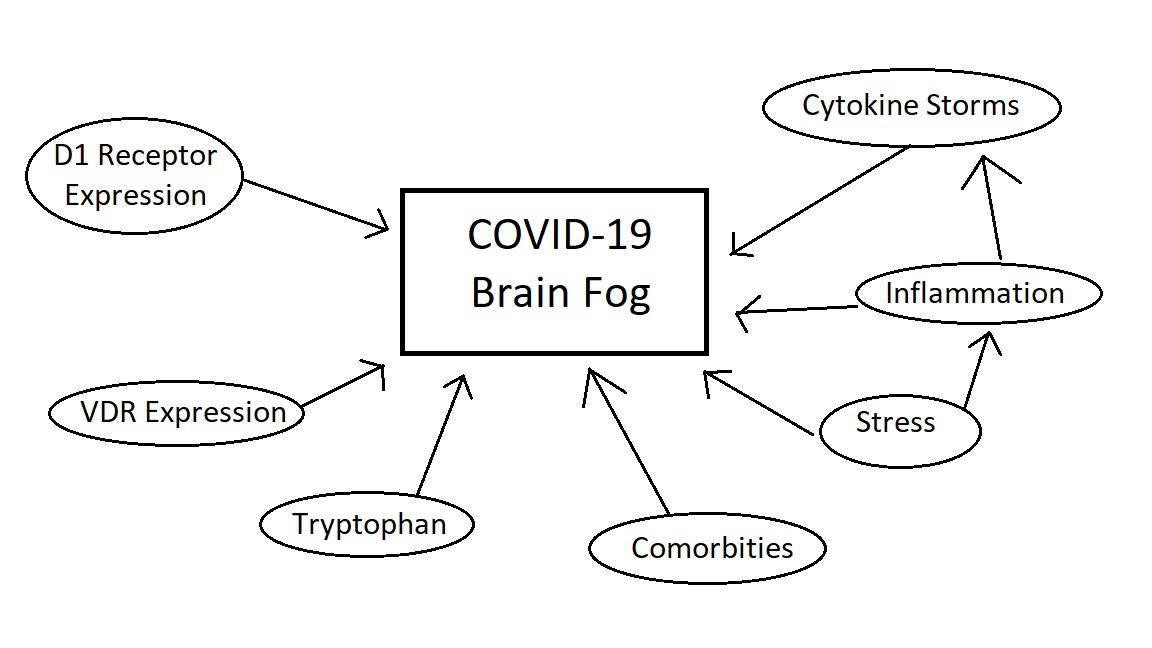
COVID-19 infection is more or less similar to other upper respiratory infections, however it was recently uncovered that those who have recovered from the SARS-2-CoV infection were also afflicted with symptoms of brain fog. Brain fog is categorized by an increase in confusion, forgetfulness, and migraines with a decrease in mental clarity and focus. There are currently multiple theories of the mechanism that the SARS-2-CoV infection impairs neurological functioning. The goal of this work is to compile and review the different theories (such as the role of cytokine storms, stress and comorbidities as well as impairment of VDRs, altered D1 receptors, and changes in tryptophan/melatonin levels) that have been published from March 2020 to till date (December 2022), along with a few therapies and treatments for brain fog. For this purpose the literature search has been carried out from March 2020 to till date by using different reputed indexing agencies like Pubmed, SCOPUS, Google Scholar and Web of Science. Based on the different theories surrounding brain fog in the literature, the possible causes could be a combination of comorbidities exacerbating the effects of COVID-19 through mechanisms of increased different kinds of stress which could create a significant inflammatory response leading to the cytokine storms, further leads to brain fog. To overcome this, there are multiple therapies and treatment options such as an increase in exercise and stress relief to combat the effect of depression and anxiety on brain fog have been recommended. Along with lifestyle changes, an increase in vitamin D, Tryptophan and/or melatonin supplements also can be used to combat brain fog. However, the exact mechanism related with post COVID infection mediated brain fog is still elusive and further extensive studies are needed to postulate the real cause.
December 28, 2025