
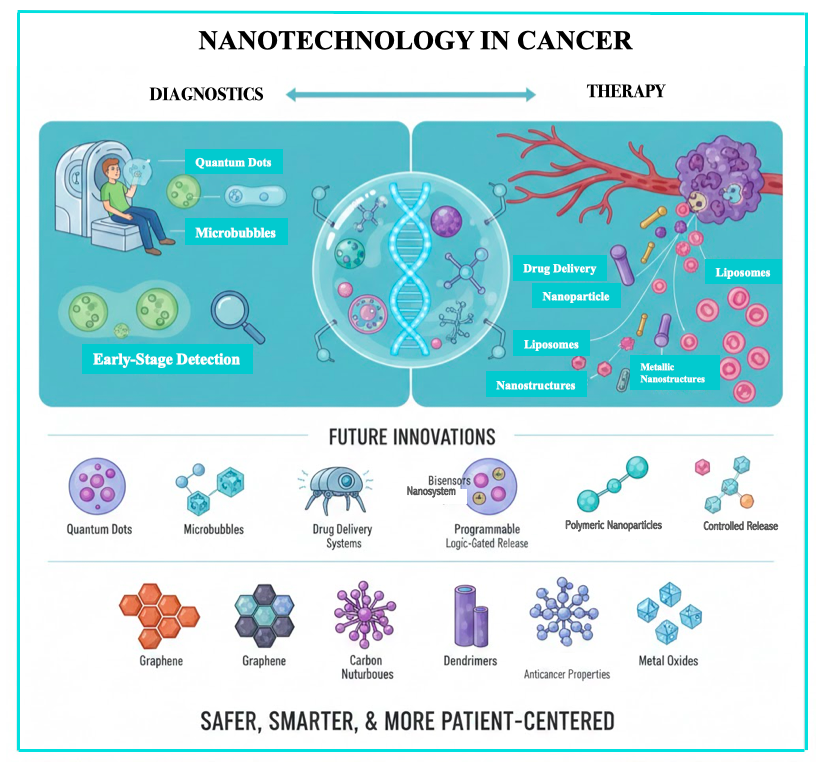
Nanotechnology has rapidly evolved into a transformative frontier in cancer diagnosis and therapy, reshaping how clinicians and researchers approach the disease. Unlike conventional treatments, which often lack specificity and cause significant collateral damage, nanomaterials offer precision, efficiency, and reduced toxicity. Current applications include nanoparticle-based drug delivery systems that encapsulate chemotherapeutic agents, ensuring controlled release at tumor sites while sparing healthy tissues. Liposomes, polymeric nanoparticles, and metallic nanostructures are notable examples that improve bioavailability, extend circulation time, and enhance therapeutic outcomes. In diagnostics, nanomaterials such as microbubbles and quantum dots are being utilized as advanced imaging agents, enabling faster, more sensitive, and non-invasive detection of malignancies. Looking ahead, the field envisions the integration of smart nanorobots and programmable nanosystems capable of autonomously identifying and eradicating malignant cells. These innovations may employ tumor-specific molecular cues, biosensors, and logic-gated release mechanisms to achieve unprecedented precision. Furthermore, diverse nanoparticle platforms—including graphene, carbon nanotubes, dendrimers, and metal oxides—are being explored not only for drug delivery but also for their intrinsic anticancer properties, such as antioxidant activity and direct tumor inhibition. By bridging materials science, oncology, and bioengineering, nanotechnology is poised to revolutionize cancer care, advancing both diagnostic accuracy and therapeutic personalization, and ultimately contributing to a future where treatment is safer, smarter, and more patient-centered.
December 28, 2025