
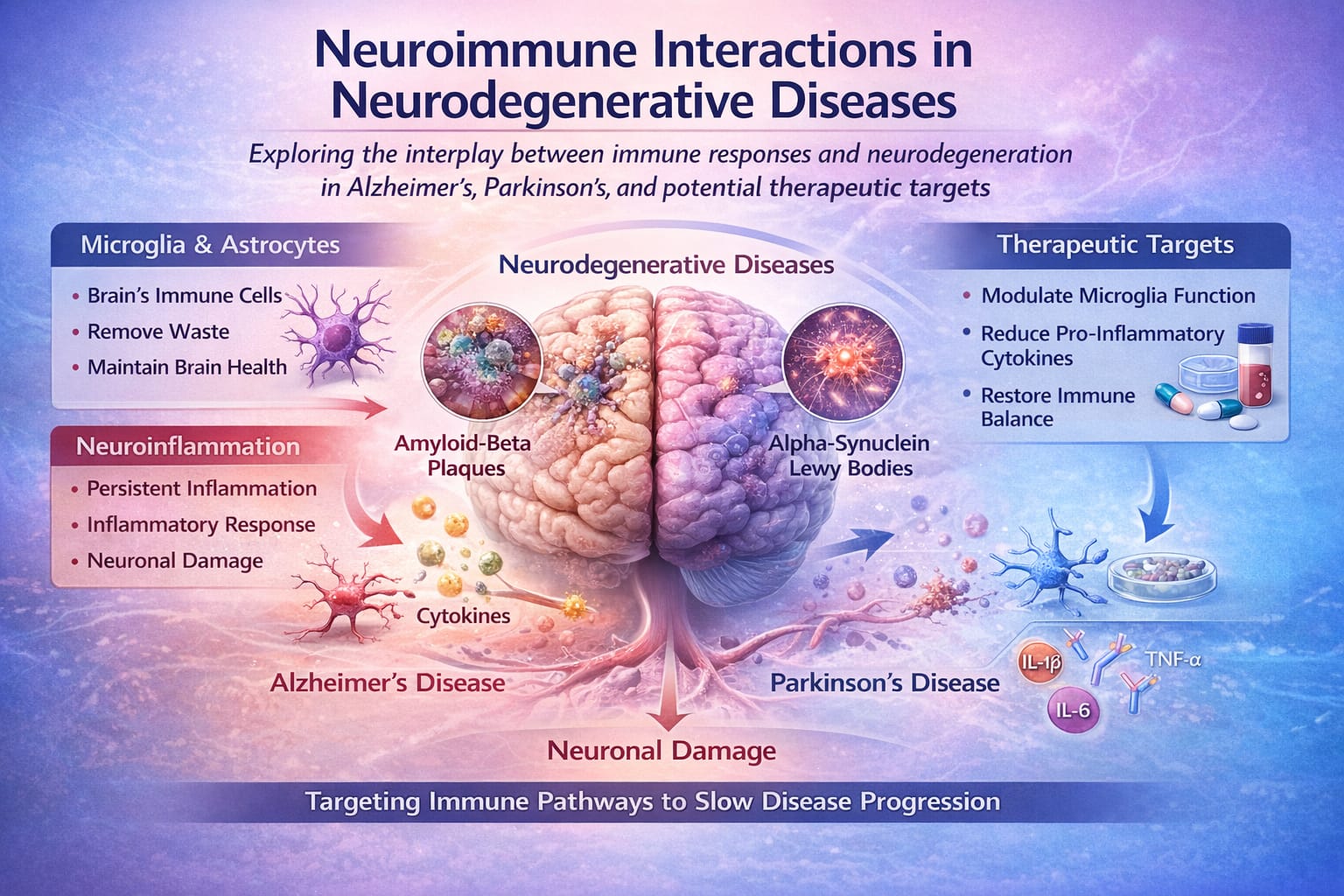
Neurodegenerative diseases such as Alzheimer’s disease and Parkinson’s disease are progressive brain disorders characterized by the gradual loss of neurons, leading to cognitive decline, memory problems, and movement difficulties. In recent years, growing attention has been given to the role of the immune system in the development and progression of these conditions. The brain has its own immune cells, mainly microglia and astrocytes, which normally protect neurons by removing harmful substances and maintaining brain health. However, in neurodegenerative diseases, these immune cells can become overactive and remain in a state of chronic inflammation. This persistent immune response, known as neuroinflammation, contributes significantly to neuronal damage. Instead of providing protection, activated immune cells release inflammatory substances that increase stress on neurons and accelerate their degeneration. In diseases like Alzheimer’s, immune cells respond to abnormal protein deposits, while in Parkinson’s disease they react to damaged neurons and protein aggregates. Over time, this ongoing inflammatory process creates a harmful cycle that worsens brain dysfunction. Recent research has highlighted the complex interaction between the nervous system and the immune system, revealing that immune responses in the brain are not always harmful but can become damaging when poorly regulated. Understanding these neuroimmune interactions has opened new possibilities for treatment. Rather than targeting neurons alone, emerging therapies aim to regulate immune activity, reduce harmful inflammation, and restore balance within the brain. Targeting immune pathways may offer promising strategies to slow disease progression and improve quality of life for individuals affected by neurodegenerative disorders
December 28, 2025