
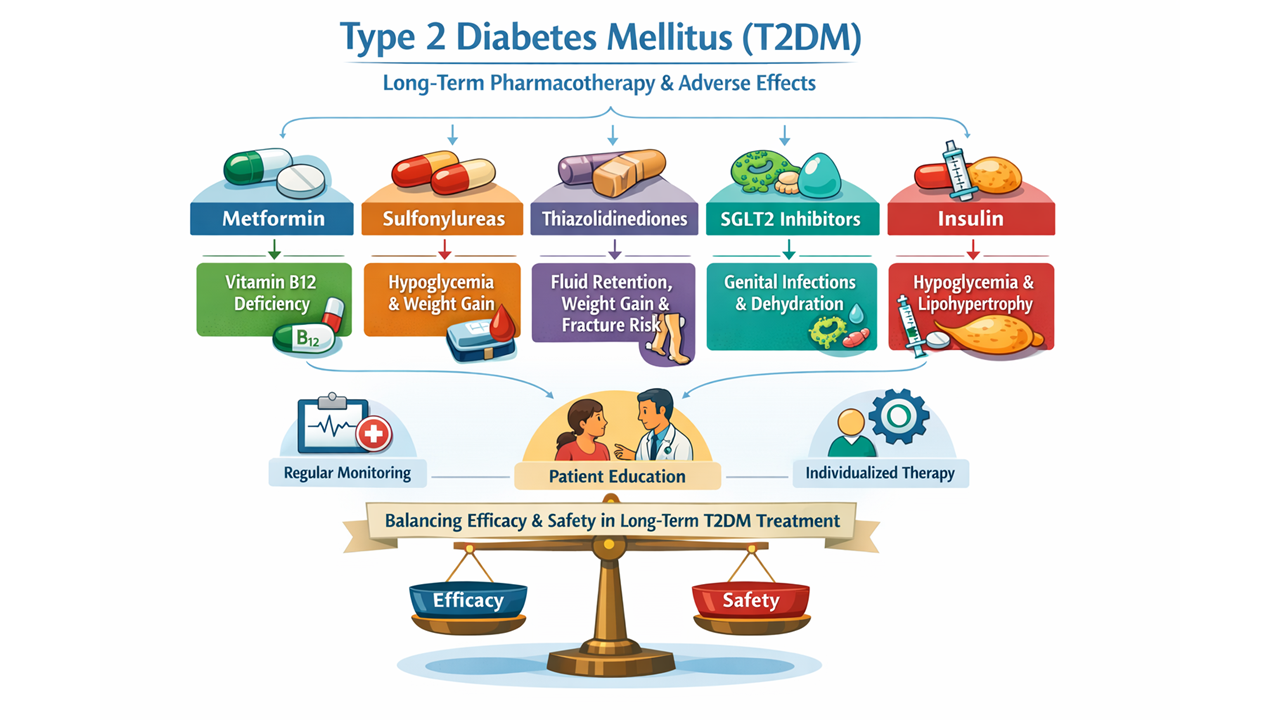
Type 2 diabetes mellitus (T2DM) is a chronic metabolic disorder requiring long-term pharmacotherapy. While antidiabetic medications effectively manage blood glucose, prolonged use may lead to significant adverse effects. This presentation focuses on major drug classes commonly prescribed in outpatient settings: metformin, sulfonylureas, thiazolidinediones, SGLT2 inhibitors, and insulin. Long-term metformin use can cause vitamin B12 deficiency; sulfonylureas may lead to hypoglycemia and weight gain; thiazolidinediones are associated with fluid retention, weight gain, and fracture risk; SGLT2 inhibitors can cause genital infections and volume depletion; prolonged insulin therapy may result in hypoglycemia and lipohypertrophy. Emphasis is placed on regular monitoring, patient education, and individualized therapy to minimize risks and optimize outcomes. Understanding the balance between efficacy and safety is crucial for improving quality of life in patients with T2DM on long-term pharmacotherapy.
December 28, 2025