
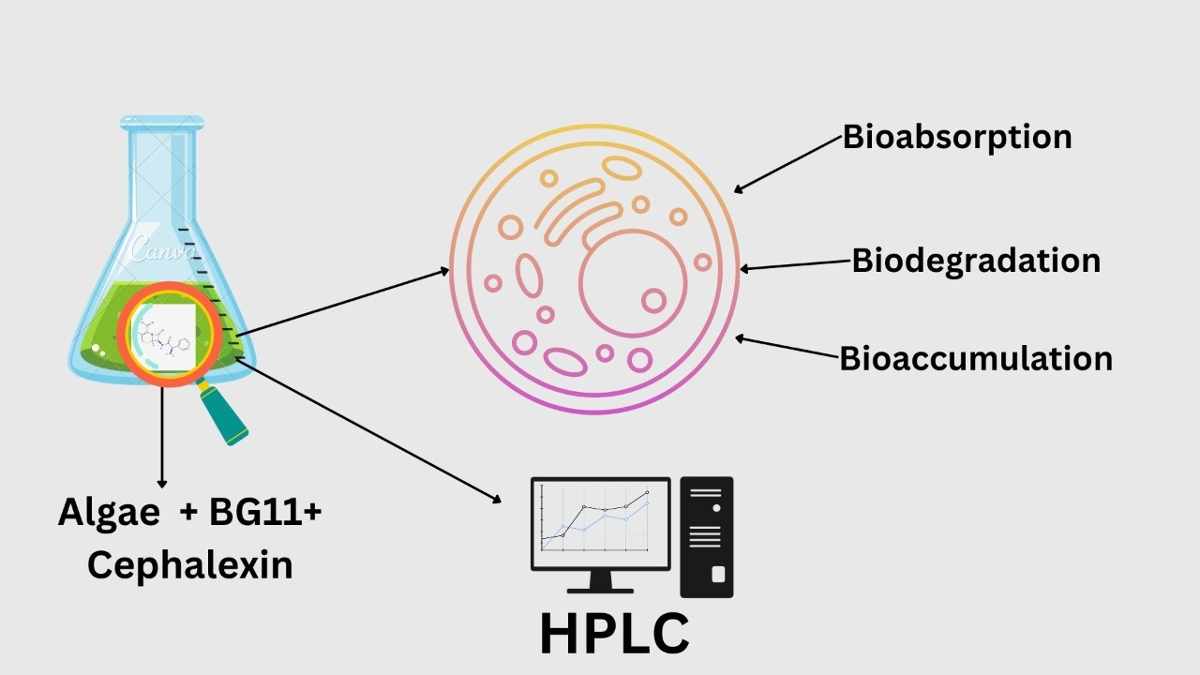
First-generation Cephalosporin antibiotics like Cephalexin are strong -lactams that are often utilised in veterinary medicine throughout many nations. Cephalexin is relatively resistant to these -lactamases and exhibits good action against both Gram-positive and Gram-negative bacteria. Therefore, Cephalexin is frequently used to treat soft tissue infections caused by Staphylococcus sp., Streptococcus sp., Klebsiella, Escherichia coli, or Proteus mirabilis, as well as upper respiratory infections, uncomplicated pneumonia, and urinary tract infections.
It is one of the most commonly prescribed antibiotics; and also one of the most widely produced. It is highly water soluble and exhibits a broad spectrum of antibacterial activity. Furthermore, Cephalosporins, which include Cephalexin, are the second most commonly prescribed antibiotic class in Europe. Cephalexin only undergoes 10% biotransformation; hence the other 90% is eliminated unaltered in the urine. As a consequence, The World Health Organization (WHO), published a report exclusively about the presence of pharmaceuticals in drinking water and the potential risks for human health and the environment. And classified Cephalosporins antibiotics as emergent environment contaminants, and are considered as water pollutants.
Additionally, various advanced oxidation processes (AOPs) have been investigated to remove Cephalexin from surface water and wastewater, such as Fenton oxidation and UV/H2O2. However, the high operational and maintenance costs of these methods restrict their utilization for long-term applications. Therefore, it is essential to explore new methods to effectively remove antibiotics from polluted water using technolog¬ically available and economic conditions. Moreover, Bioremediation of antibiotics contaminated waters by microalgae is recently attracting research communities. The microalgal bioremedial system is a solar power-driven, ecologically comprehensive and sustainable reclamation strategy. Studies have demonstrated that microalgae are able to bioaccumulate and remove environmental contaminants such as nutrients (nitrogen and phosphorous), heavy metals and emerging contaminants (Like Antibiotics) from wastewater. Also, Microalgae-based technology is an environmental-friendly and cost-effective method for antibiotic removal.
In this study, Chlorella pyrenoidosa was cultured with varying concentrations (0, 50, 100, 150, 200 mg/L) of Cephalexin in BG11 medium. Along with these varying concentrations of biodegradation assay two control assays also used at same time, for describing role of abiotic factor like light in degradation of Cephalexin. Growth was monitored by the changes in chlorophyll pigments, which include chlorophyll a, chlorophyll b, and carotenoids. On the other hand, in the algae-antibiotics culture system, C. pyrenoidosa could effectively remove cephalexin; the experimental set-up was for 11 days, and the sample was taken at 0, 2, 4, 7, and 11 days, respectively. The characterization of microalgae was done by SEM (Scanning Electron Microscopy), and the biodegradation assay was done by using HPLC.
December 28, 2025