
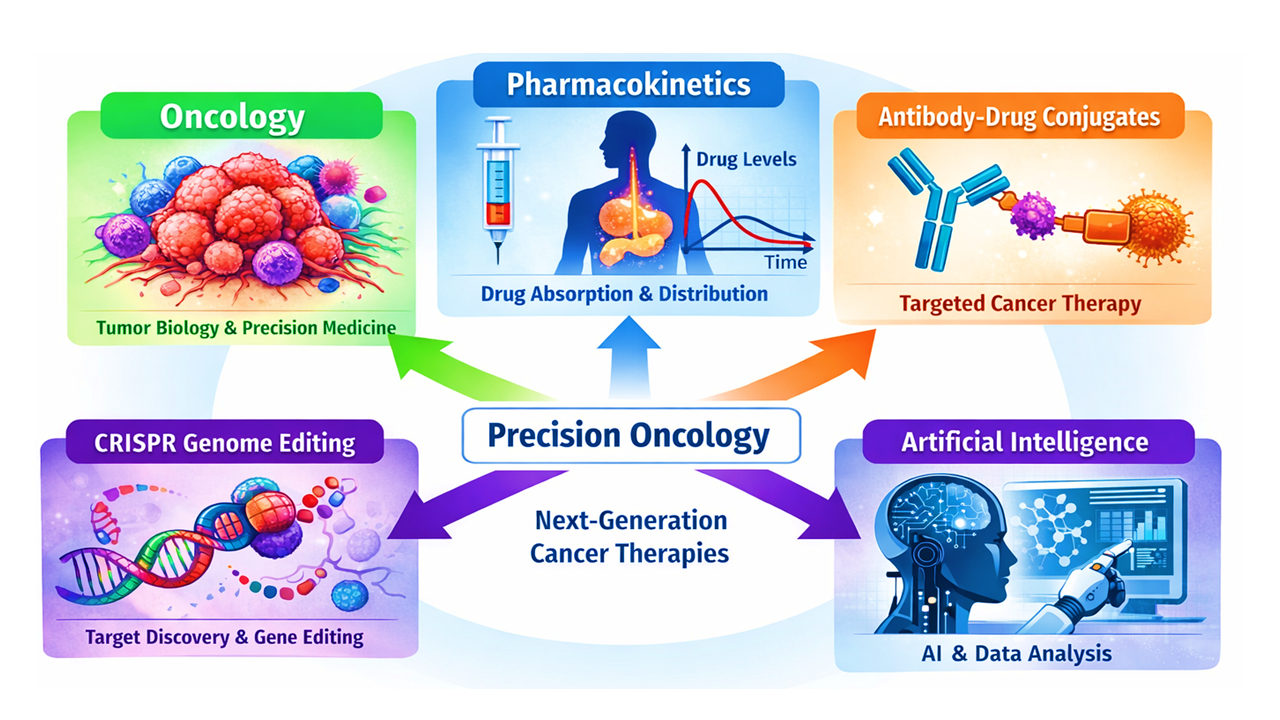
Pharmacology of cancer drugs, also known as oncology pharmacology, is a branch of pharmacology that focuses on the study of drugs and medications used for the treatment of cancer. It involves understanding how these drugs work, their mechanisms of action, pharmacokinetics (absorption, distribution, metabolism, and excretion), pharmacodynamics, adverse effects, and potential drug–drug interactions. In breast cancer, pharmacological strategies are guided by molecular subtype, including hormone receptor (HR) status, HER2 expression, and genomic alterations, allowing for increasingly personalized treatment approaches. Breast cancer therapeutics encompass cytotoxic chemotherapy, endocrine therapy, targeted molecular agents, antibody–drug conjugates (ADCs), and immunotherapy each acting through distinct pharmacological mechanisms. While conventional chemotherapy remains essential in many settings, targeted and endocrine therapies have significantly improved clinical outcomes with reduced systemic toxicity. Advances in molecular biology and personalized medicine continue to refine pharmacological strategies, improving survival outcomes and quality of life for breast cancer patients. This article will present the enumerate the drug mechanism, absorption, distribution, metabolism distribution and side effects in breast cancer treatments.
Precision oncology is revolutionizing cancer care by leveraging artificial intelligence (AI) to provide tailored treatments based on the genetic and molecular characteristics of each patient’s cancer. Here’s how AI is transforming the field: AI models can forecast how a patient’s cancer will react to certain drugs by analyzing data from prior clinical studies, genetic profiles, and real-world evidence. This helps in forecasting ineffective treatments, and reducing side effects. Optimize drug selection, ensuring the patient receives the best possible therapy. By combining AI with cutting-edge technologies like CRISPR and radiomics, precision oncology is paving the way for more effective, patient-centric cancer care. These advances highlight the synergy between computational tools and clinical expertise in tackling the complexity of cancer.
December 28, 2025