
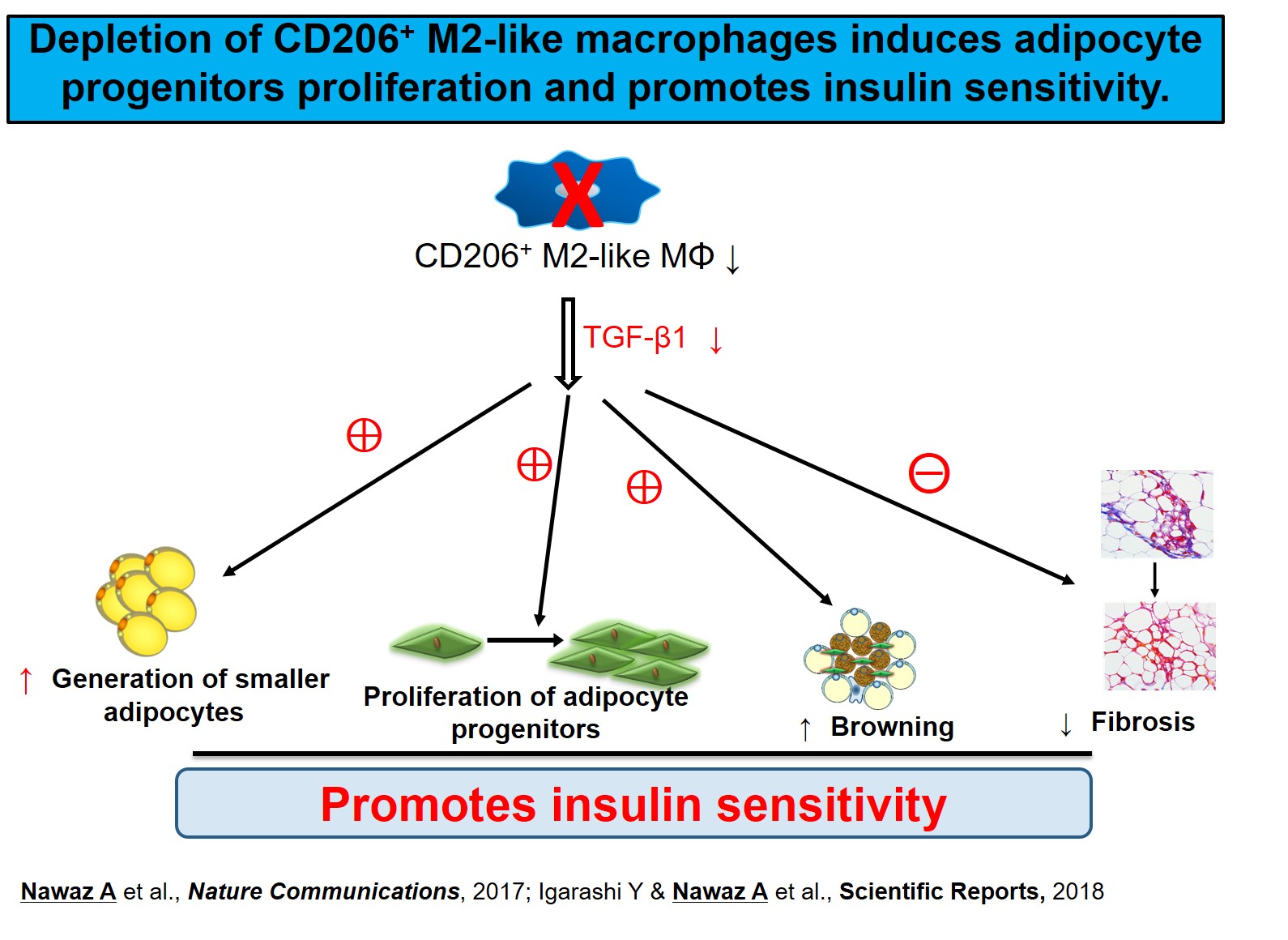
The global prevalence of obesity and type 2 diabetes has reached alarming levels, posing a substantial public health burden. Recent research has exclusively explored a previously underappreciated aspect of these metabolic disorders-the pivotal role played by immune cells, particularly macrophages, in the pathogenesis of insulin resistance. Insulin resistance precede and predict risk of type 2 diabetes. Adipose tissue, previously considered a mere energy storage organ, has emerged as an active immune organ contributing to metabolic dysregulation. Phenotype-switching of macrophages within adipose tissue, shifting from an anti-inflammatory M2 phenotype to a pro-inflammatory M1 phenotype contribute to the development of obesity-induced insulin resistance. It is important to explore the role of adipose tissue macrophages in initiating and sustaining low-grade inflammation, which contributes to insulin resistance. Our team is actively engaged in aiming to understand cell-cell communications among adipocytes, immune cells, and resident stromal cells within adipose tissue and in skeletal muscle. In addition to the adipose tissue milieu, I will discuss the systemic effects of immune cell dysregulation in obesity and skeletal muscle injury, including the role of macrophage-derived regulatory factors in promoting insulin resistance. In conclusion, understanding the integral role of immune cells, particularly macrophages, in obesity and type 2 diabetes pathophysiology offers a promising avenue for novel therapeutic strategies. In this presentation, my aims to provide a comprehensive overview of current research in this field, fostering a deeper appreciation for the crosstalk between immunology and metabolism in these prevalent metabolic disorders.
December 28, 2025