
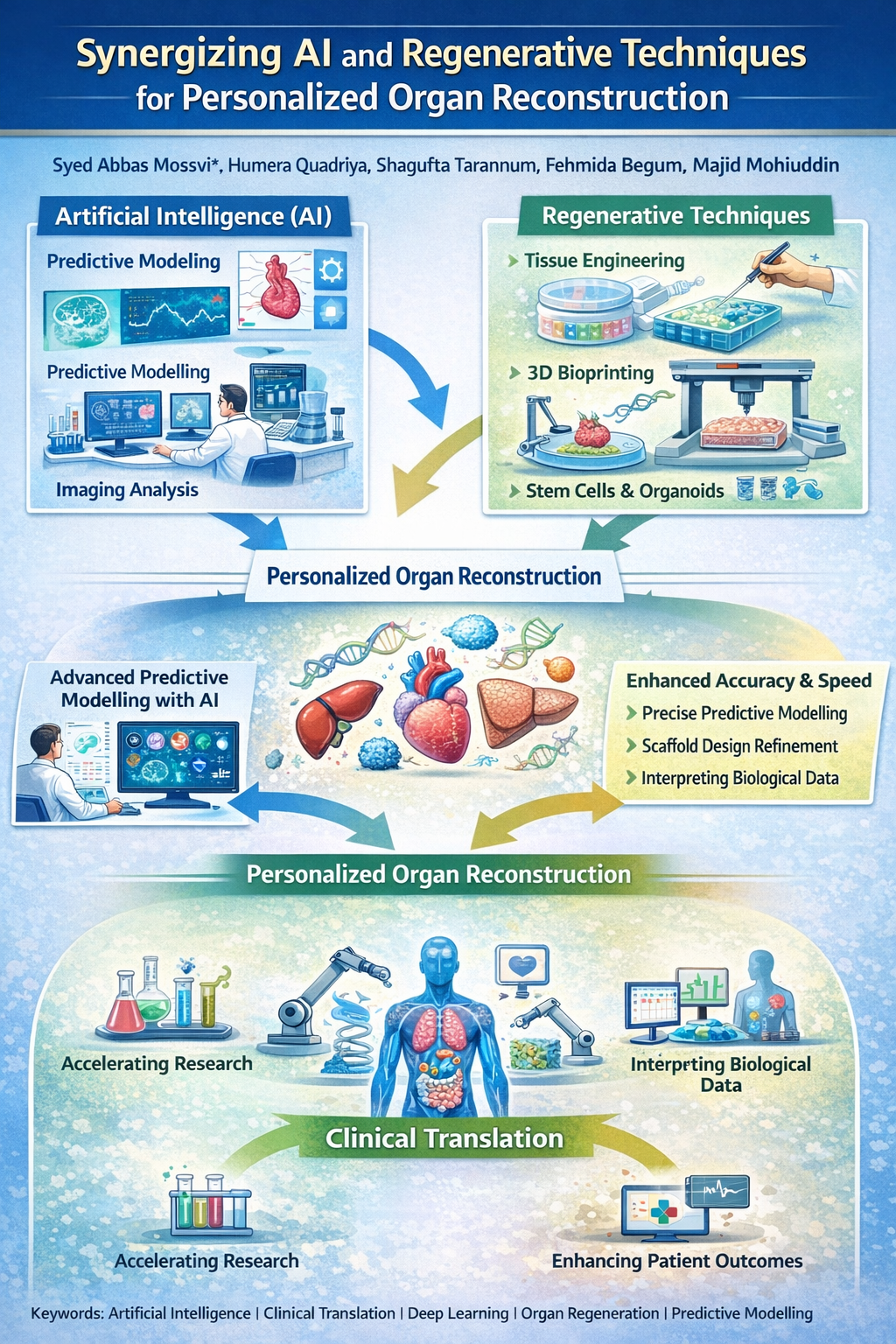
Organ regeneration is a transformative objective in regenerative medicine, aiming to restore damaged tissues and organs through biologically functional constructs. Artificial intelligence (AI) has emerged as a powerful enabler in this domain, accelerating discovery through predictive modeling, experimental optimization, and advanced imaging analysis. Key techniques include tissue engineering with scaffold-cell constructs, 3D bioprinting of biomimetic structures, and AI-driven approaches for analyzing large-scale biological datasets, predicting stem cell behavior, and refining scaffold design. Recent studies demonstrate that AI models—particularly deep learning architectures—outperform traditional methods in organoid development prediction, offering enhanced accuracy and speed while reducing costs. These capabilities streamline organoid culture workflows and support scalable tissue engineering. AI also facilitates image segmentation, parameter tuning, and outcome forecasting, contributing to more precise and personalized regenerative strategies. In conclusion, the integration of AI with conventional regenerative methodologies enhances predictive power, improves experimental efficiency, and supports clinical translation. This synergy lays a robust foundation for future innovations in organ regeneration and personalized therapeutic applications.
December 28, 2025