
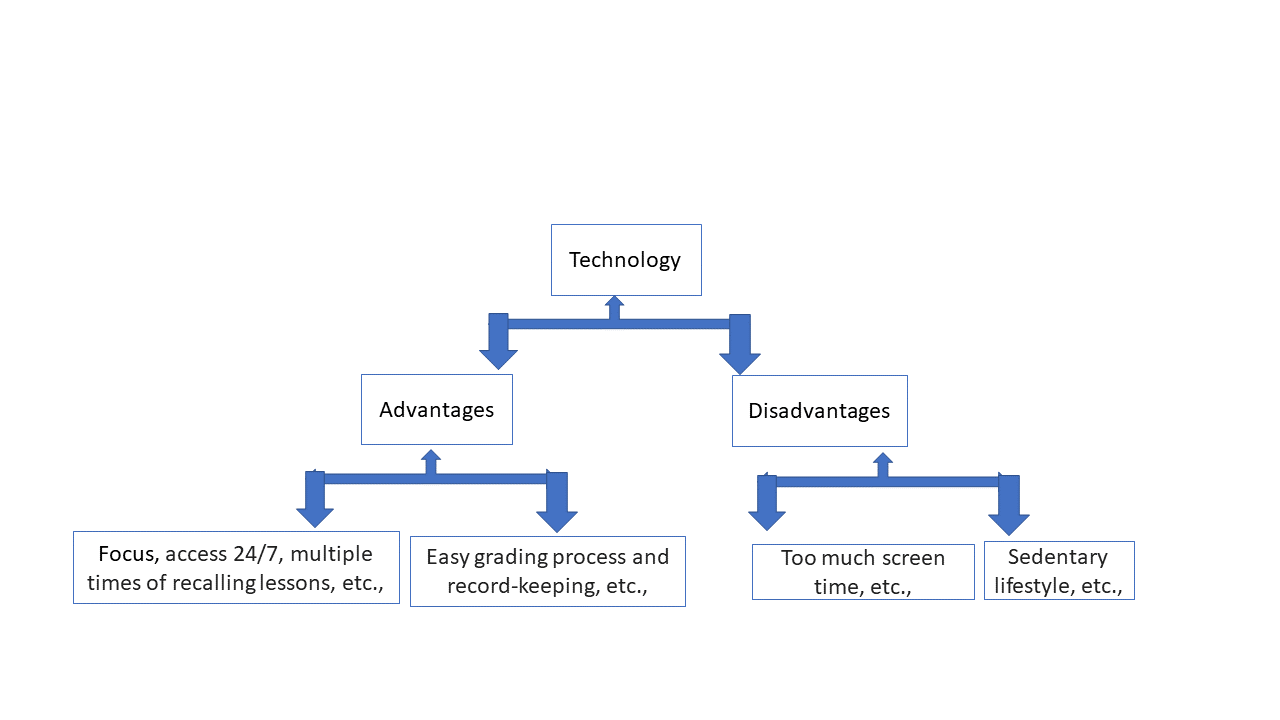
The COVID-19 pandemic demonstrated to everyone that online or virtual classes could be vital for teaching and learning. The effective use of digital learning tools in classrooms could increase the students’ engagements, help teachers improve their lesson plans, and facilitate personalized learning. It also helps students build essential 21st-century skills. There are many advantages like access 24/7, multiple times of recalling lessons; However, there are many disadvantages like too much screen time, sedentary lifestyle, etc. Studies showed that more than 75% of academicians believe that the use of digital tools in the classroom make them more effective and efficient in their teaching and other activities. Because technology simplifies distributing assignments, accessing course materials, and eases much of the grading process and record-keeping. Further, it can also help educators make better use of their valuable time for things like lesson planning and assisting students in areas where they need extra help. From a cost perspective, it also reduces the cost of physical materials. Technology is a key which helps students to be more proactive and equipped for the next stages of both their education and their future career. Here, I will be explaining the positive and negative impact of technology in education.
December 28, 2025