
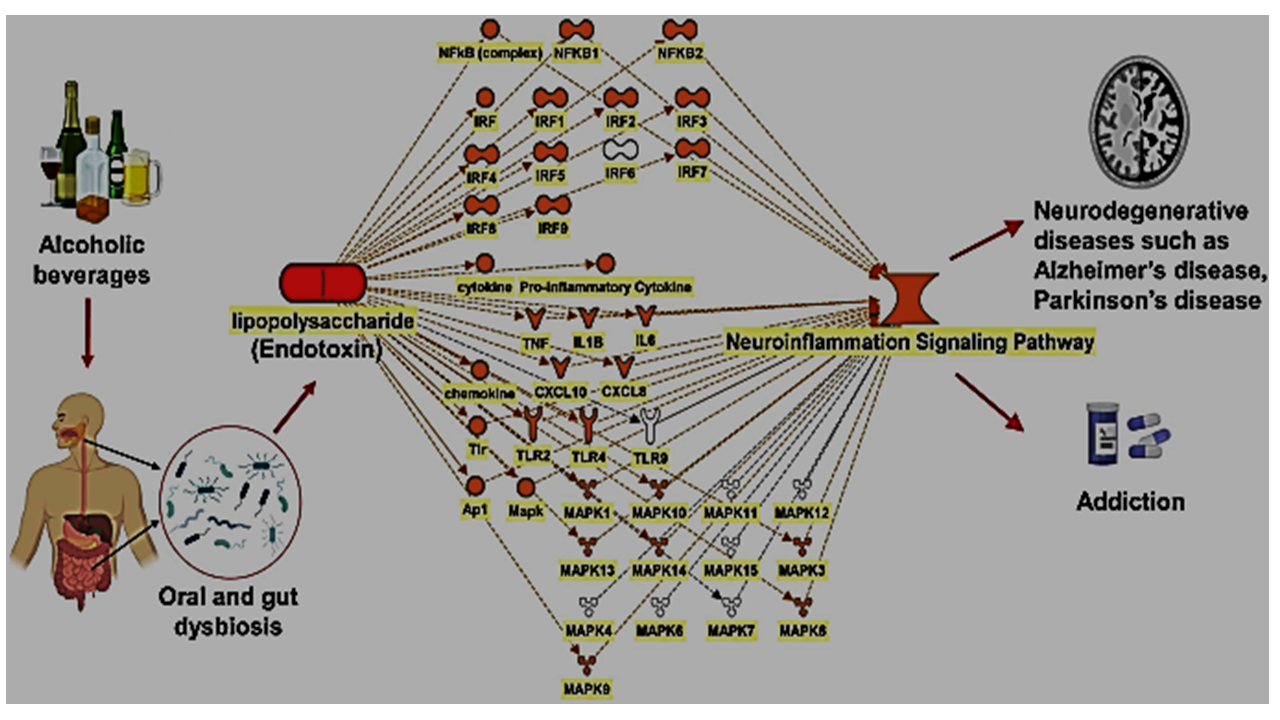
Drawing on data from the QIAGEN Knowledge Base (QKB) and GEO public datasets using a machine learning algorithm (Ingenuity Pathway Analysis [IPA]), a network meta-analysis on the molecular mechanisms underlying alcohol misuse elevation of amyloid precursor protein (APP) expression. The primary investigation focused on the involvement of neuroinflammatory signaling pathways in alcohol modulation of APP as a potential risk factor in AD. Pathways and connectivity maps were generated using QKB and IPA and were used to analyze GEO public datasets collected from in-vivo and in-vitro studies, representing exposure to alcohol in the prenatal, adolescent and adult. Analysis of connectivity maps revealed 40 molecules that are influenced by alcohol misuse and influence APP. Among these molecules, 24 molecules that are associated with acetaldehyde, a metabolite of alcohol with toxic effects, and APP. In this study, a computational algorithm was used to generate functional connectivity among the biological molecules, signaling pathways, and diseases and functions. This IPA bioinformatics study has revealed the involvement of systemic inflammation and the neuroinflammation signaling pathways in alcohol-induced modulation of APP and increased expression of APP is associated with AD.
December 28, 2025