
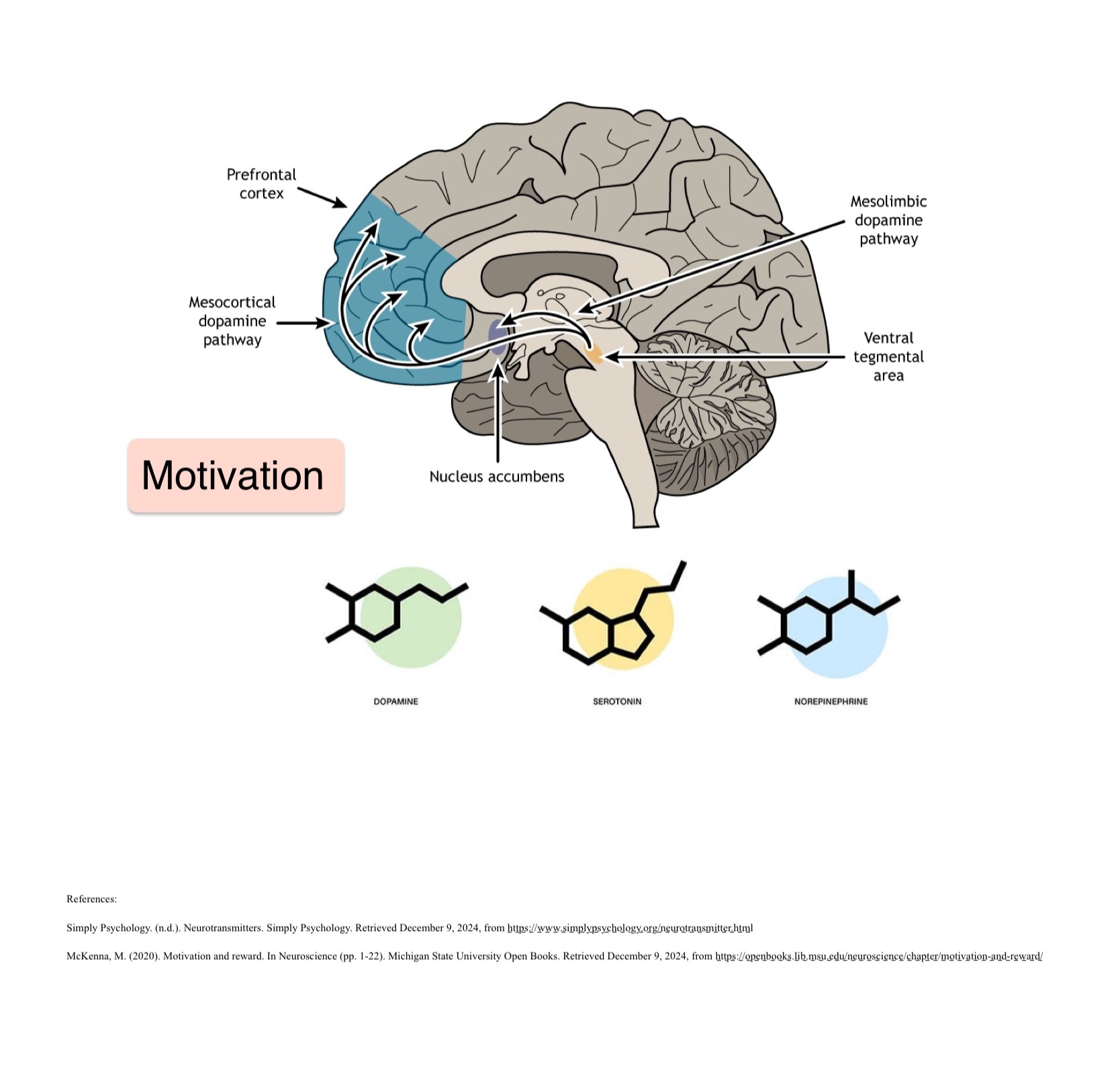
What truly motivates us to act and accomplish our goals? Motivation is the fundamental psychological construct that drives most human behavior, shaping decision-making and goal-directed actions. Motivation results from relationships between different internal and external variables, neurotransmitters, and brain regions. The reward system, prefrontal cortex, and amygdala are the three main brain regions involved in motivation. These regions are important when understanding motivational processes, as they collaborate to process rewards, control emotions, and overall direct behavior. By anticipating and reacting to rewards, the reward system; more specifically the mesolimbic dopamine pathway; promotes goal direction by rewarding behavior that results in positive outcomes. The amygdala however blends motivation with emotions, affecting how people respond to rewards and penalties; whereas the prefrontal cortex helps by assessing choices, controlling long-term goals, and preventing acting on impulse. These brain regions are ultimately influenced by neurotransmitters such as dopamine, serotonin, norepinephrine, and endorphins, which are crucial in aiding goal-directed behavior. Dopamine plays a significant role in promoting motivation and strengthening reward and anticipation behavior. Serotonin controls mood and emotional well-being and promotes perseverance, promoting long-term motivation. Endorphins on the other hand are in charge of fostering well-being and lowering uneasement; while norepinephrine is used to improve focus and arousal; which are motivational factors. On top of brain regions and neurotransmitters, stress and hormones like cortisol can influence motivation. Depending on its duration and intensity, stress can either help or hurt motivation. Short-term stress boosts motivation and focus, enabling people to take on urgent activities like finishing work before a deadline. Chronic stress, on the other hand, frequently results in burnout, which lowers motivation and general well-being. Hunger, thirst, and energy levels are examples of physiological conditions that have a big impact on motivation. They prioritize basic needs and motivate action to meet them. Another important component of motivation is emotional reactions; while bad emotions can lead to avoidance, happy emotions can encourage engagement and persistence. Behavior is further influenced by the interaction of extrinsic and intrinsic motivation. Extrinsic motivation, which is fueled by outside rewards like money or recognition, can direct behavior toward particular goals, whereas intrinsic motivation, which is motivated by curiosity, personal interest, or fulfillment, tends to uphold effort over time, by either improving desired actions or decreasing undesirable ones. Theories such as operant conditioning developed by B.F. Skinner provides an understanding of how rewards and penalties affect motivation. The dynamic interplay between external pressures and internal impulses is highlighted by the influential effects that these external incentives and punishments can have on both intrinsic and extrinsic motivation. Ultimately, motivation is a complex phenomenon influenced by a combination of neurological, psychological, and environmental factors. Understanding how the brain regions, neurotransmitters, and both internal and external factors work together to drive behavior enhances our comprehension of motivation. The neuroscience behind motivation offers valuable understandings of human behavior, helping understand how different elements (brain processes, emotional responses, and external conditions) interact to influence the decisions and actions individuals take during their lives.
December 28, 2025