
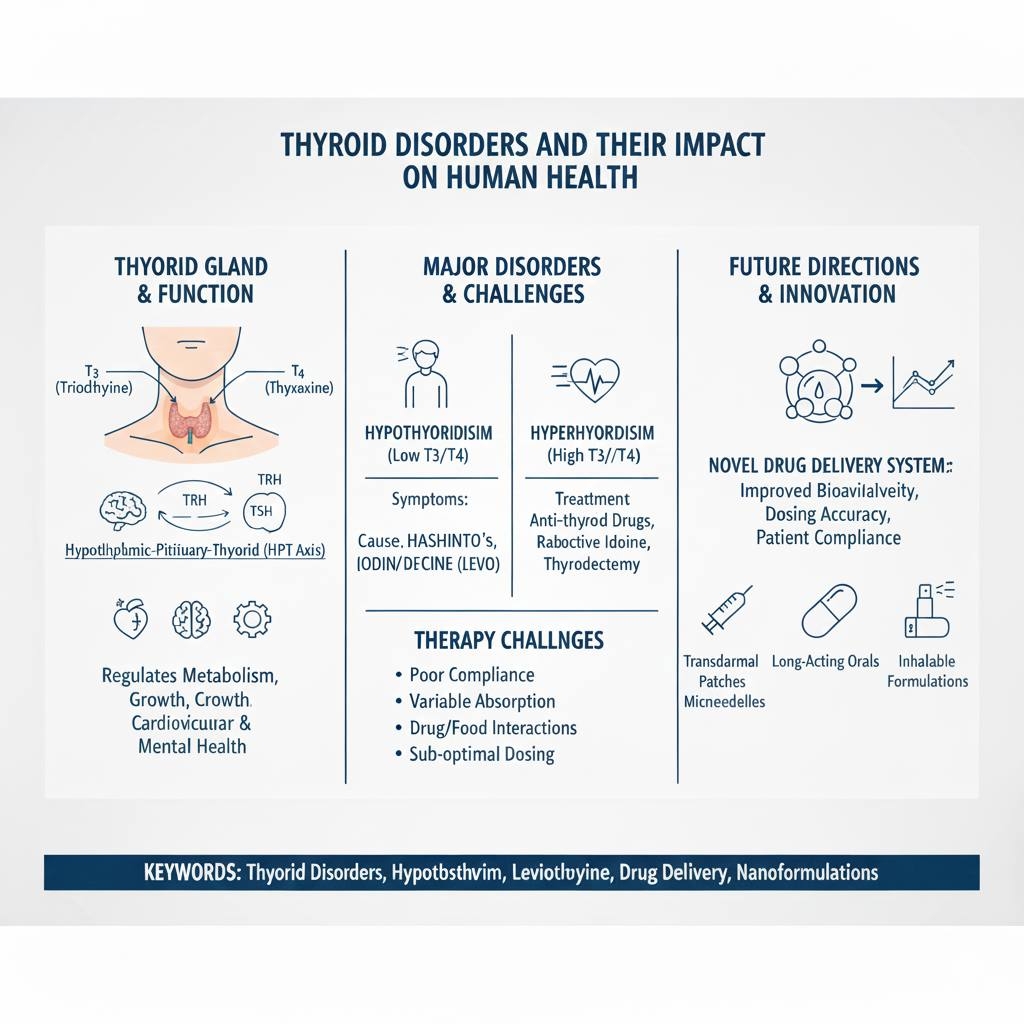
Thyroid hormones play a crucial role in regulating metabolic processes, growth, and development, and maintaining cardiovascular, physical, and mental health. Disruption of thyroid gland activity can lead to hypothyroidism or hyperthyroidism, both of which may result in serious illness if undiagnosed or inadequately treated. Hypothyroidism is most commonly managed through replacement therapy with levothyroxine (LEVO), a synthetic form of thyroxine, while hyperthyroidism is treated using anti-thyroid drugs, radioactive iodine, or thyroidectomy. These therapies are typically administered via oral, intravenous, or rectal routes. Despite long-standing clinical use, conventional treatment approaches are associated with several challenges, including poor patient compliance, variable gastrointestinal absorption, and significant interactions with food and other medications, often leading to sub-optimal dosing and adverse clinical outcomes. The thyroid gland, located in the anterior neck, synthesizes and secretes triiodothyronine (T3) and thyroxine (T4), with T3 being the biologically active form. Although both hormones are produced by the thyroid, approximately 80% of circulating T3 is generated through peripheral conversion of T4. Thyroid hormone secretion is tightly regulated by the hypothalamic–pituitary–thyroid axis via a negative feedback mechanism involving thyrotropin-releasing hormone and thyroid-stimulating hormone. Hypothyroidism is characterised by insufficient thyroid hormone production and affects approximately 5% of the global population, with a similar proportion remaining undiagnosed. Primary hypothyroidism accounts for the majority of cases and is commonly caused by iodine deficiency or autoimmune conditions such as Hashimoto’s thyroiditis. Given the limitations of current therapies, there remains a clear need for novel drug delivery approaches to improve bioavailability, dosing accuracy, and patient compliance. This review highlights conventional treatment strategies and explores emerging drug delivery systems aimed at improving therapeutic outcomes in thyroid disorders.
December 28, 2025