
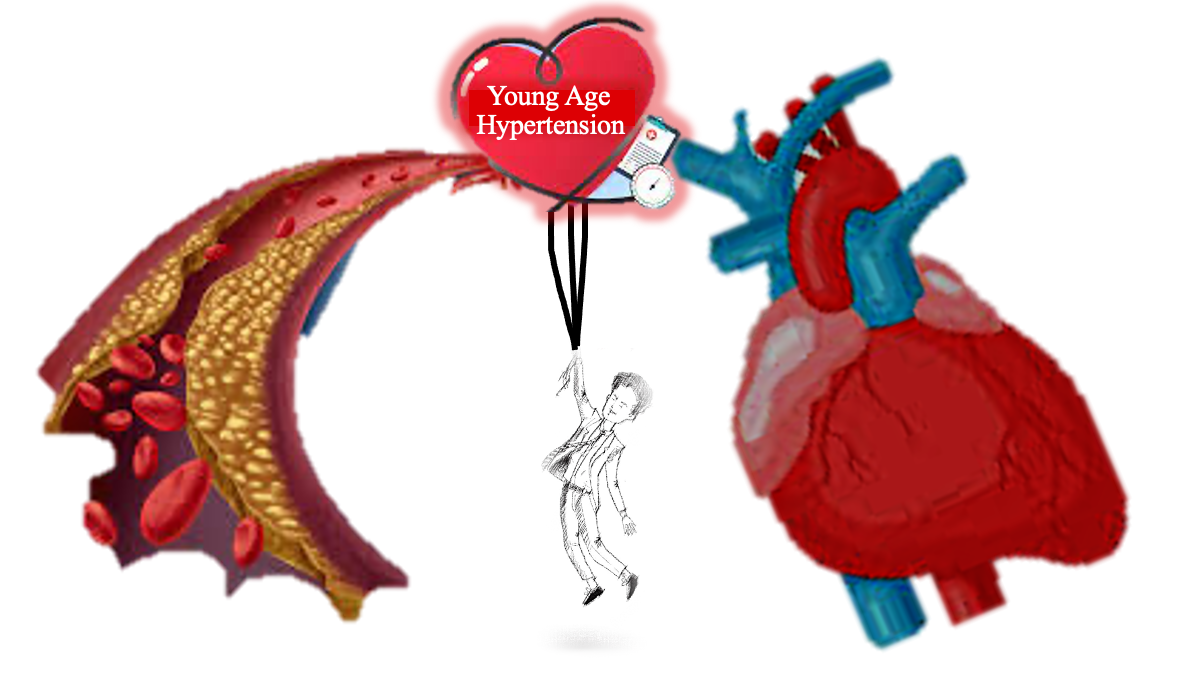
Globally, hypertension is a major cause of morbidity and mortality. The worrisome increase in the incidence of hypertension among young people is mostly attributable to unhealthy lifestyles, obesity, smoking, sleep apnea, stress etc. Worldwide estimates of the prevalence of hypertension in the year 2000 among adults aged 20 to 29 years were 12.7% in men and 7.4% in women rising to 18.4% and 12.6%, respectively, in 30- to 39-year olds. The estimated prevalence of hypertension among those aged 18 to 39 years in the United States (2011–2012) was 7.3%. Further, Hypertension among young people is common, affecting 1 in 8 adults aged between 20 and 40 years. This number is likely to increase with lifestyle behaviors, the above mentioned factors and lowering of hypertension diagnostic thresholds. Moreover, The ACC/AHA lowered the diagnostic threshold for stage 1 hypertension in the 2017 Guidelines from 140/90 to 130/80 mm Hg across all age categories to some controversy, not least because it increased the prevalence of hypertension in the US population to 46%. Furthermore, blood pressure has been shown to strongly track with age meaning that individuals with elevated blood pressure in youth are likely to have elevated blood pressure in later life. As the prevalence of hypertension in the young age population is increasing, and in order to improve therapeutic outcomes information concerning the features, ideal blood pressure objectives, and special considerations for young age hypertensive patients is required to improve clinical outcomes. Various factors should be considered when managing hypertension in young age patients, and there are many controversial issues and conflicting results related to the optimal treatment of hypertension in the young age population. Moreover, Young age hypertension further leads to increases all-cause mortality and results in subclinical organ damage early. However, diagnosis rates are lower, and treatment is often delayed in young people. This reflects the lack of high-quality evidence that lowering BP in young adults improves cardiovascular outcomes later in life. Finally, there is an urgent need of specific advice on management and treatment of hypertension in young age population. In order to reduce the global burden caused by young age hypertension worldwide.
December 28, 2025